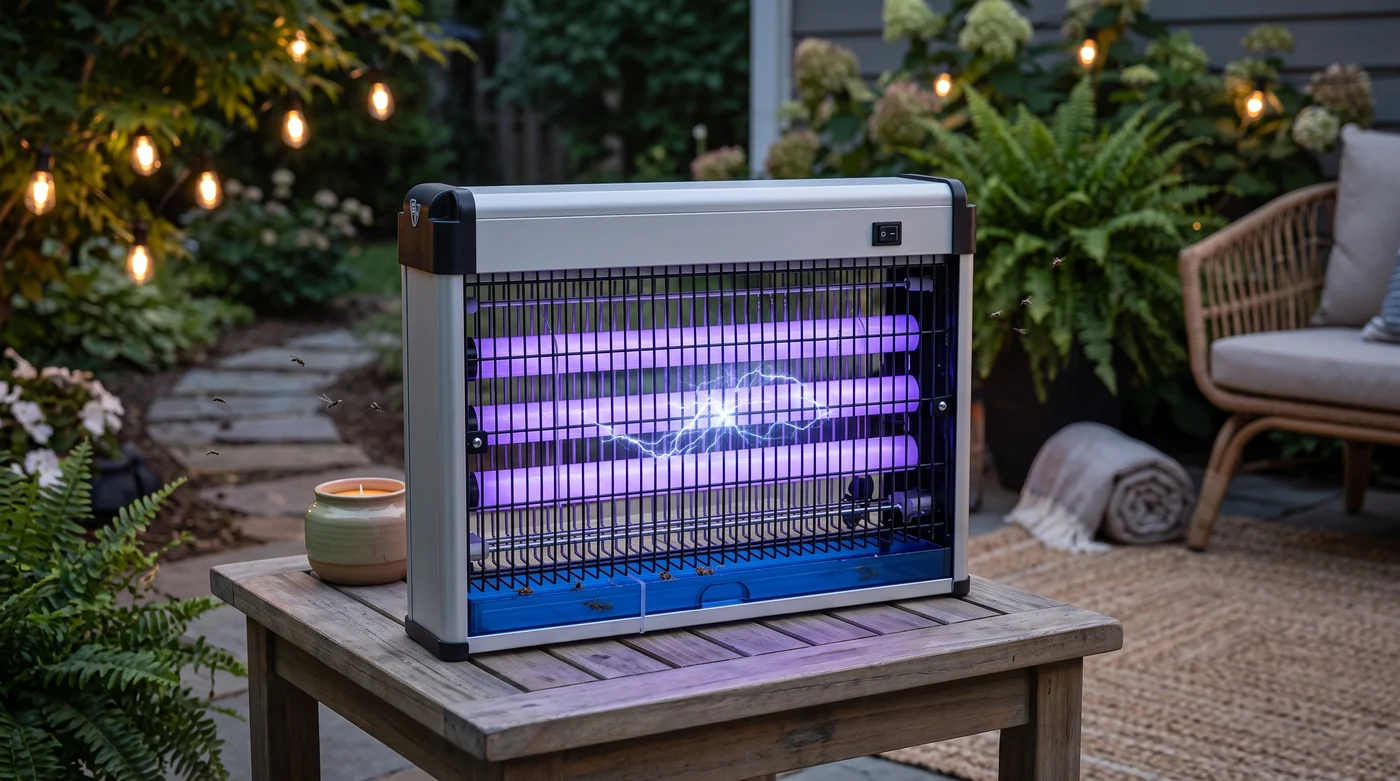
5 Key Features to Look for in an Outdoor Bug Zapper
Selecting an effective insect control device requires reviewing key technical specifications. Here are 5 essential features that define a top-tier Outdoor Bug Zapper.
For positioning strategies and placement tips, refer to the main guide.
1. High Discharge Voltage (4500V Grid)
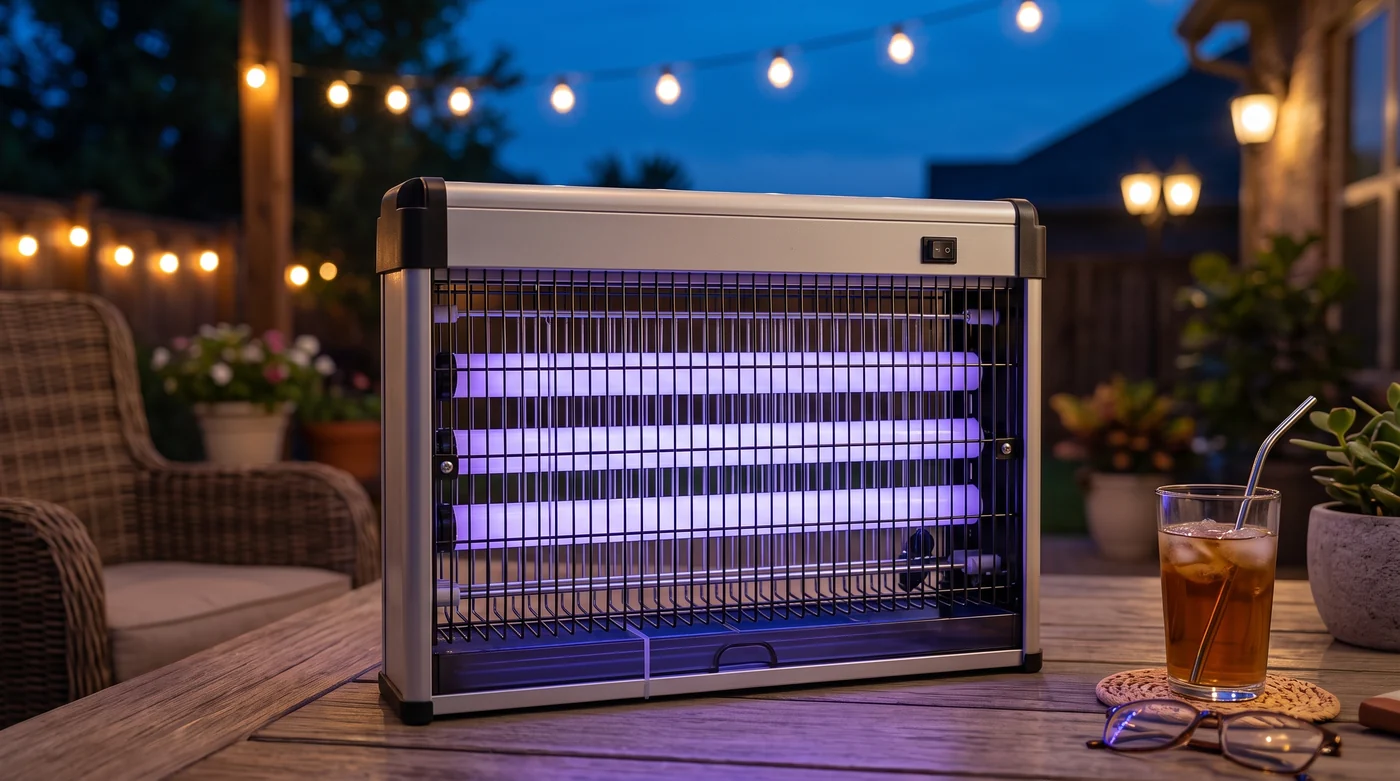
Voltage determines how quickly insects are eliminated upon contact. A 4500V electric shock mechanism provides instant neutralization, preventing bugs from clogging the internal housing. The difference shows up most with larger insects. Moths, beetles, and big mosquitoes can survive brief contact with a weak grid, escaping stunned or — worse — lodging between the wires and shorting out sections of the device. A 4500V discharge resolves contact in a single strike, so the grid stays clear and keeps working at full strength through the night.
Consistent output matters late in the operating cycle too. A well-built unit delivers the same knockdown power in the final hours of its battery reserve as it does at dusk, rather than fading into a weak grid that attracts insects without eliminating them. When comparing models, treat discharge voltage as the core specification that everything else supports — attraction range and coverage mean little if insects reach the grid and fly away unharmed.
2. Solar Charging with Integrated Dusk Sensor
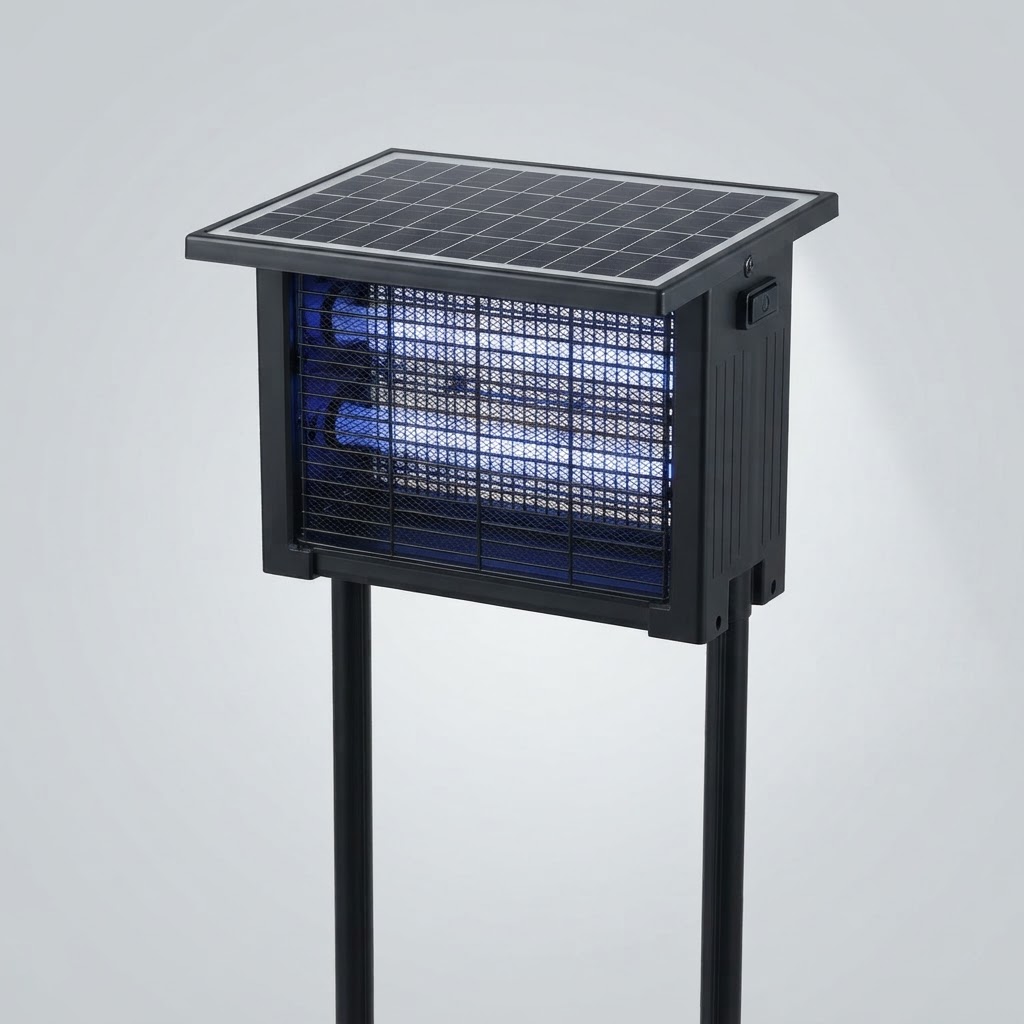
A self-sustaining energy system eliminates the need for extension cords. Featuring solar energy charging capabilities and an integrated panel sensor, the device charges in 6-8 hours of direct sunlight and activates automatically as daylight fades. Placement determines how well any solar unit performs. Position the device where its panel receives direct, unshaded sun for most of the day — the 6-8 hour charge window assumes real sunlight, not the filtered light under a covered porch or dense tree canopy. On overcast days charging is slower, so a spot with maximum exposure builds in a margin for imperfect weather.
The dusk sensor is what makes the system genuinely hands-off. It reads ambient light rather than running on a clock, so activation naturally tracks the seasons: earlier in fall, later at the height of summer. That keeps the unit's operating hours aligned with peak insect activity without any reprogramming. One caution: keep the sensor away from bright porch lights or landscape fixtures, which can trick it into reading dusk as daytime and delay the grid from switching on.
3. IPX4 Waterproof Weather Resistance
Outdoor gear must withstand wet environment conditions. An IPX4 waterproof rating safeguards internal electronics from rain splashes and ambient night humidity.4. Wide Coverage and Lightweight Portability
Weighing just 2 lbs, a portable and wireless design allows easy transit from patio to campsite while protecting a broad coverage area of 1,000 sq ft. To put 1,000 sq ft in perspective, a typical residential patio measures a few hundred square feet, so a single unit comfortably covers the patio plus the surrounding lawn edge where insects stage before moving toward people. On larger properties, the goal is not to blanket the whole yard but to protect the zones where people actually gather — one well-placed unit near the seating area accomplishes more than raw coverage numbers suggest.Portability changes how the device gets used day to day. At 2 lbs, it hangs from a shepherd's hook, pergola beam, or tree branch without special hardware, and it moves in seconds — patio on weeknights, campsite on the weekend, the dock or fire pit whenever plans change. Corded units, by contrast, stay permanently anchored to wherever the outlet happens to be.
5. Stainless Steel Construction and Maintenance Accessories
Durable internal Stainless Steel grid bars resist oxidation and electric wear. An included cleaning brush tool makes routine debris removal quick and safe.Read the full guide: Ultimate Guide to Outdoor Bug Zappers: Solar Power, Placement, and Efficiency
Grid material is easy to overlook until a unit has spent a full season outdoors. The grid endures thousands of high-voltage discharges while exposed to humidity, dew, and temperature swings — conditions that corrode cheaper metals and gradually degrade conductivity. Stainless steel holds up under that stress, which is why it is the benchmark for devices meant to live outside rather than in a garage.
The included cleaning brush is a small detail with outsized value. Insect debris left on the grid acts as an insulator, blunting the discharge exactly where contact happens. A quick brushing with the power off — roughly once a week during heavy season — keeps the bars clean and the voltage doing its job. Units that ship without a purpose-made tool tend to get cleaned rarely, and usually poorly.