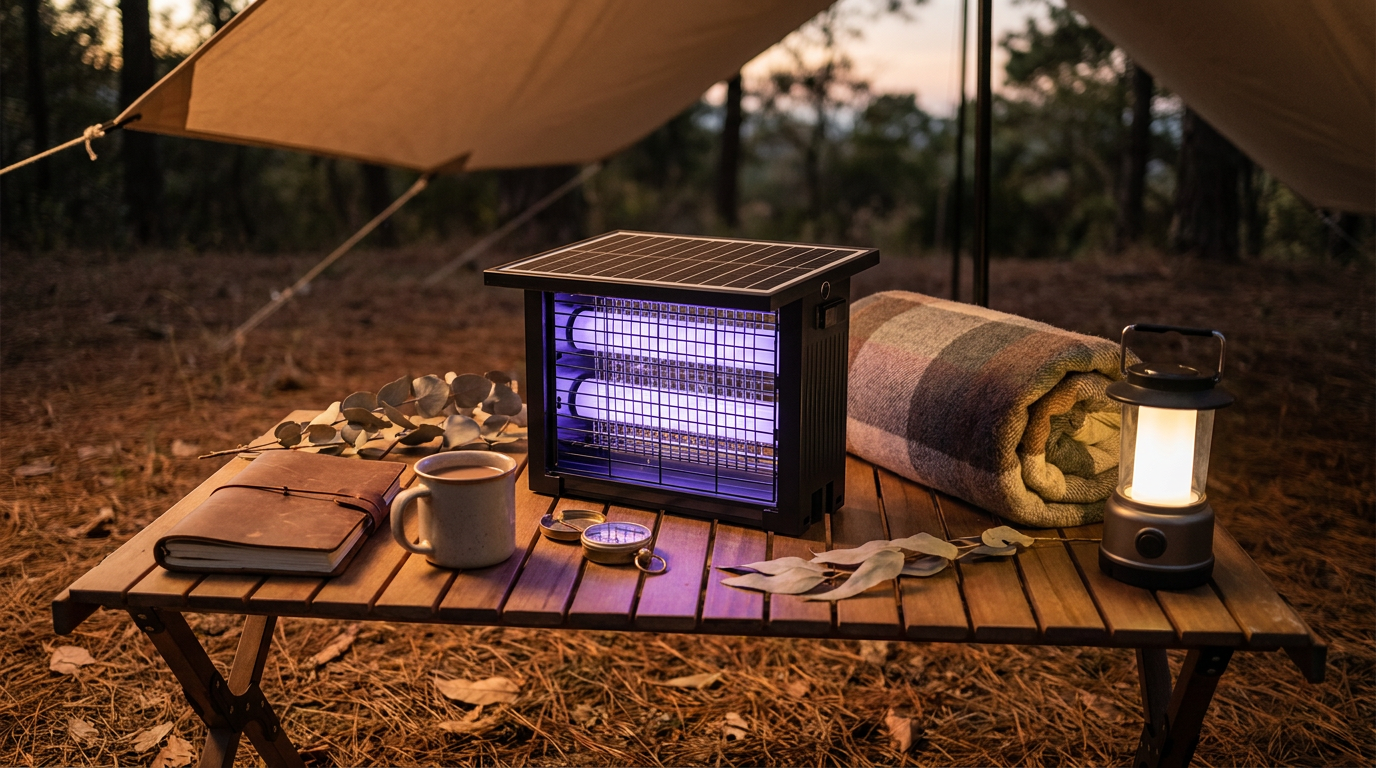
The Right Way to Use a Portable Insect Killer for Camping
 Daniel OkaforField Tester
After years of field testing gear, I can tell you our field data shows the #1 mistake campers make is placing their bug zapper too close, which actually draws insects directly into their personal space before killing them. I've seen it dozens of times. You think you're protected, but you've just set up a homing beacon for every mosquito in the area, with your arm as the final waypoint. There's a much smarter way to keep your campsite clear.
Stop Putting Your Zapper on the Picnic Table
A bug zapper works by attracting insects with its UV light. The American Mosquito Control Association notes that light is a common attractant used in traps. When you place that light source on your table, you're inviting pests to fly directly through your space to get to it. A few get zapped, but many more just buzz around your head, drawn to the general area you've so helpfully illuminated for them. It’s a flawed strategy that makes the problem worse.The 'Kill Perimeter' Strategy I Use
The only method that's worked for me consistently is creating a 'kill perimeter.' I place the zapper 15 to 20 feet away from our main campsite area—the firepit, the chairs, or the tent entrance. The zapper does its job, pulling bugs toward its light, but it intercepts them long before they ever notice we're there. Here's the moment it earned its place: during a trip last summer, we set up one zapper on the table and one 20 feet away. The perimeter unit was covered in bugs by morning; the table unit was clean, and so were our arms.
Why This Strategy Demands a Solar, Wireless Unit
This perimeter strategy is only practical with a specific type of device. You can't run an extension cord 20 feet into the brush, and you can't be swapping batteries on a device you've hung from a tree limb every night. I tested this for a 5-day trip with no access to power. The Outdoor Insect 4500V zapper's solar panel was the key. It soaked up sun all day while hanging from a branch, ensuring it had a full charge to run all night. A device that needs an outlet isn't a true portable insect killer for camping; it's a liability.What surprised me was the sheer stopping power of the 4500V grid. It's not just for mosquitoes. In humid, swampy areas, I've seen it take down horseflies and large moths instantly—no struggling, just a clean 'zap.' Weaker zappers just seem to stun them. After a surprise downpour one night, I was sure it would be fried, but the unit is built for this. If you're camping in unpredictable weather, you need a heavy duty waterproof bug zapper solar model that can take a hit. This one held up.
How far away should I place a portable insect killer for camping?

Photo by Magda Ehlers on Pexels
Always place it 15 to 20 feet away from your primary activity zone. The goal is to create a perimeter defense that intercepts insects before they detect you. Placing it too close uses its UV light to draw pests directly to you, which is the exact opposite of what you want.
Is a 4500V zapper really necessary for camping?
From my experience, yes. Lower voltage models might handle gnats, but when you're dealing with larger, more resilient insects like June bugs or certain types of biting flies, you need the decisive power of a 4500V mosquito killer lamp. It ensures a quick, effective kill on a wider range of pests you'll encounter in the wild, so you're not left with a device that only does half the job.