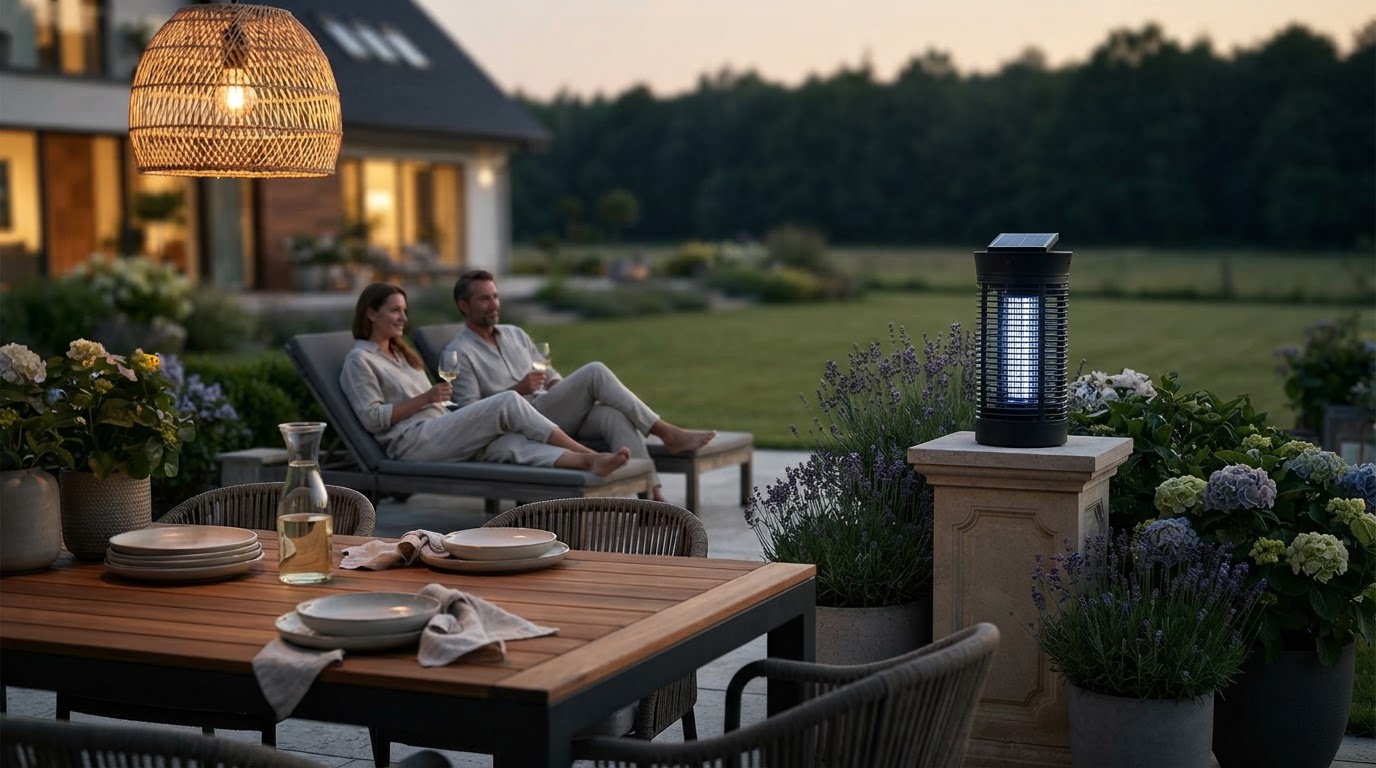
Flowtron 1-Acre Zapper Price Drop vs Outdoor Bug Zapper
 Maya ChenContributing Editor
October 26, 2026 — Consumers are currently flocking to a steep discount on the Flowtron 1-Acre 40W UV Outdoor Electric Bug Zapper, which has dropped to $35. The price reduction, facilitated by a 50% promo code via DBROTH on Amazon, targets homeowners looking for high-voltage coverage for large residential lots.
The conventional wisdom says that a higher voltage grid and a larger coverage area equate to a more effective pest management strategy. According to Slickdeals.net, this Flowtron unit features a 5600V grid and includes a specific mosquito attractant to lure insects. However, here's the part nobody talks about: static, high-wattage units tethered to a 120V outlet ignore the reality of modern outdoor mobility. While a 5600V grid sounds impressive on paper, the Outdoor Bug Zapper operates with a 4500V mechanism that achieves similar lethality without requiring a permanent extension cord setup. Run the math: a 40W constant-draw device adds measurable costs to a utility bill over a summer season, whereas solar-integrated alternatives leverage ambient light to maintain a charge.
Data from Slickdeals.net indicates the sale price is $69.99 before the application of the 50% discount code. This aggressive pricing often masks the limitations of stationary hardware. For users who prioritize portable insect protection and cordless bug control, the requirement for a fixed power source is a significant tactical disadvantage. The Outdoor Bug Zapper utilizes a panel sensor for automated operation, ensuring the device only draws power when necessary, unlike manual plug-in units that often run indefinitely. Furthermore, solar powered zappers provide a level of camping gear reliability that a 40W Flowtron cannot match in off-grid scenarios.
Expert tip: When evaluating high-voltage zappers, check the transformer efficiency rather than just the peak voltage. A 5600V burst is useless if the recovery time between discharges is slow. For mobile setups, ensure your device has an IP-rated housing to protect the internal circuitry from morning dew, which can short out exposed high-voltage grids.
I’ll change my mind when independent laboratory testing proves that a stationary 5600V grid captures significantly more target species than a mobile 4500V unit placed directly at the point of human activity.