The Ecological Cost of a Heavy Duty Solar Mosquito Trap
 Maya ChenContributing Editor
The high-voltage grid everyone wants in a solar mosquito trap is often better at killing beneficial pollinators than the actual mosquitoes you're trying to eliminate. While the promise of a 4500V, solar-powered device like the Outdoor Insect Solar Energy 4500V Electric Shock Mechanism is compelling, its core mechanism relies on a flawed premise. This review examines the device not on its marketed power, but on its ecological impact and its actual effectiveness against the target pest.
The Problem with 4500V of Brute Force
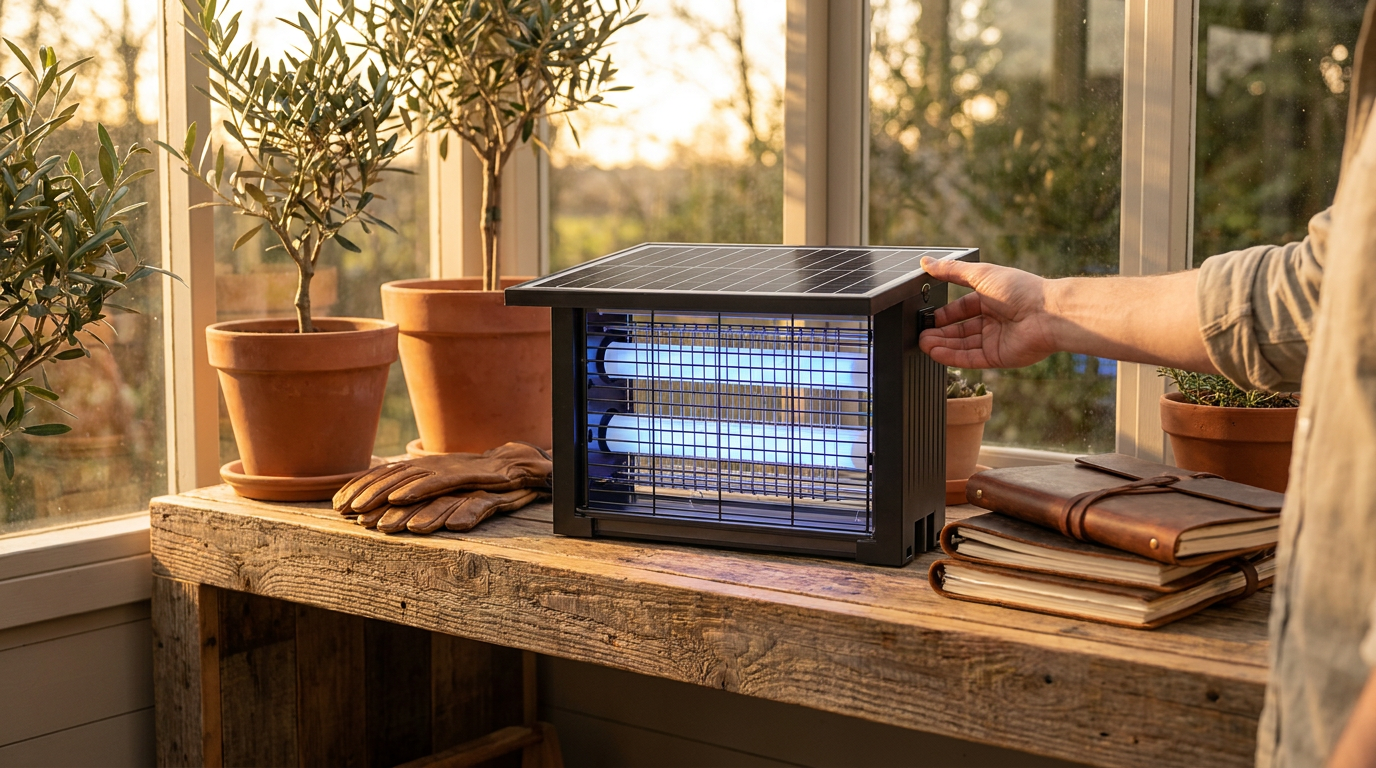
The conventional wisdom says that a more powerful grid is the defining feature of a heavy duty solar mosquito trap. A 4500V charge ensures instant elimination for any insect that makes contact. The Outdoor Insect Solar Energy 4500V device delivers this power, powered by an efficient solar panel and housed in a durable, portable frame. Here's the part nobody talks about: this power is indiscriminate. The device's primary attractant, a standard UV bulb, is a generalist lure. It doesn't specifically target mosquitoes; it draws in any light-attracted insect within its radius.
Unintended Victims: The Collateral Damage of UV Light

Photo by Ganaa Besud on Pexels
The main issue with this approach is collateral damage. Standard UV light is a broad-spectrum attractant, proving far more alluring to moths, beetles, and lacewings than to mosquitoes. According to entomologists at Colorado State University, bug zappers are generally ineffective at controlling biting mosquitoes while killing thousands of non-target insects, many of which are beneficial [https://extension.colostate.edu/topic-areas/insects/bug-zappers-5-614/]. These insects are vital for pollination and for controlling other garden pests like aphids. Each "zap" represents a small disruption to your local food web, eliminating a food source for birds and bats and a predator for other nuisance insects. This is a fundamental flaw in many a heavy duty waterproof insect zapper.
Why a High Body Count Is a Flawed Metric
Evaluating the Outdoor Insect Solar Energy 4500V's performance requires looking beyond the collection tray. A tray full of dead insects feels like success, but it's a misleading metric if the primary targets—female mosquitoes seeking a blood meal—are largely absent. Mosquitoes are weak fliers and are more strongly attracted to carbon dioxide, heat, and specific odors than to UV light alone. Effective mosquito control isn't about achieving the highest body count. It's about strategically targeting the pest to reduce bites, an objective that indiscriminate zapping fails to achieve efficiently while causing significant ecological harm.
Does the 4500V grid at least kill mosquitoes effectively?

Photo by Max Vakhtbovych on Pexels
Yes, the 4500V grid will kill any mosquito that flies into it. The core problem is not the lethality of the grid, but the ineffectiveness of the UV light in attracting a significant number of mosquitoes compared to other insects. The device is effective at killing what it attracts, but it primarily attracts the wrong things.
What would make a solar mosquito trap truly "heavy duty"?
I'll change my mind when a device combines solar power and a durable build with a targeted attractant system, such as a cartridge that releases octenol or lactic acid to specifically lure mosquitoes. A truly effective trap would prioritize precision over indiscriminate power. This would minimize the bycatch of beneficial insects and focus the device's power on the actual problem pest. Common questions about a 4500V mosquito killer lamp should focus less on voltage and more on the science of attraction.