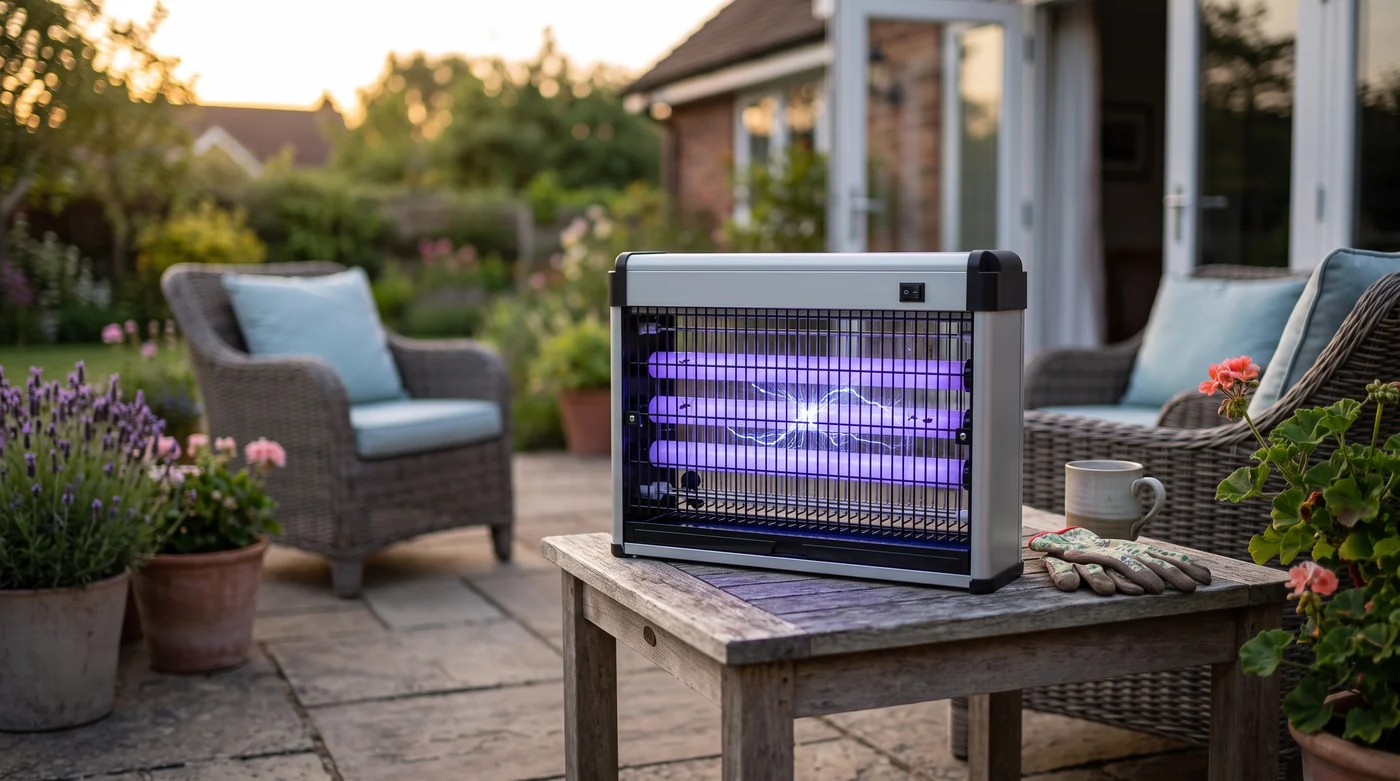
How Solar Powered Outdoor Bug Zappers Work: Mechanics Explained
Understanding off-grid pest control starts with exploring how solar energy powers modern insect elimination devices. The Outdoor Bug Zapper combines solar charging, automated lighting sensors, and high-voltage extermination inside a single portable unit.
The Core Components of Solar Pest Control
Unlike traditional plug-in models that lock you to a wall outlet, solar-powered units store ambient sunlight into internal storage cells. This portable and wireless design makes insect defense effortless during off-grid camping or remote backyard gatherings.
To explore full setup and safety guidelines, refer to the main guide. Four parts do the work, and each depends on the others. The photovoltaic panel harvests daylight; the internal battery stores that energy; the light sensor decides when to spend it; and the electrified grid delivers the result. Because generation, storage, and discharge all happen inside one 2 lbs housing, there is nothing to wire, mount, or configure — the unit is fully operational wherever it hangs.
That self-contained architecture is what separates solar zappers from their plug-in predecessors. A corded unit is only as flexible as the nearest outlet, and outdoor outlets are scarce exactly where insects are worst: property edges, tree lines, and campsites far from any circuit. A solar unit inverts the constraint — placement is chosen for pest-control effectiveness first, and the power system simply follows along. The IPX4-rated housing closes the loop, letting the electronics live outdoors full-time through splashes, dew, and light rain rather than being carried inside every time the weather turns. For camping in particular, that means one less device competing for power banks and charging cables — the zapper manages its own energy budget from the moment it leaves the car.
How Solar Charging and Dusk Sensors Function

The continuous operation of a solar zapper depends on clear power conversion pathways:
- Photovoltaic Panel: Converts sunlight into electrical energy stored in internal batteries.
- Automated Sensor: An integrated panel sensor detects surrounding light levels, switching the grid on when darkness falls and turning it off at dawn.
- Charging Efficiency: A standard charge time of 6-8 hours of direct sun provides operational battery life of 8-12 hours overnight.
The sensor deserves the same consideration. Because it reads ambient light rather than following a clock, nearby artificial lighting can confuse it: a bright porch fixture or streetlamp shining directly on the sensor may hold the unit in daytime mode well after dark. Keeping the device away from strong artificial light ensures it activates at true dusk, when mosquitoes and other night-flying insects begin moving. The payoff of the clock-free design is that operation automatically tracks the seasons, switching on earlier as autumn evenings shorten without any adjustment from the owner.
Grid Mechanics and Insect Elimination
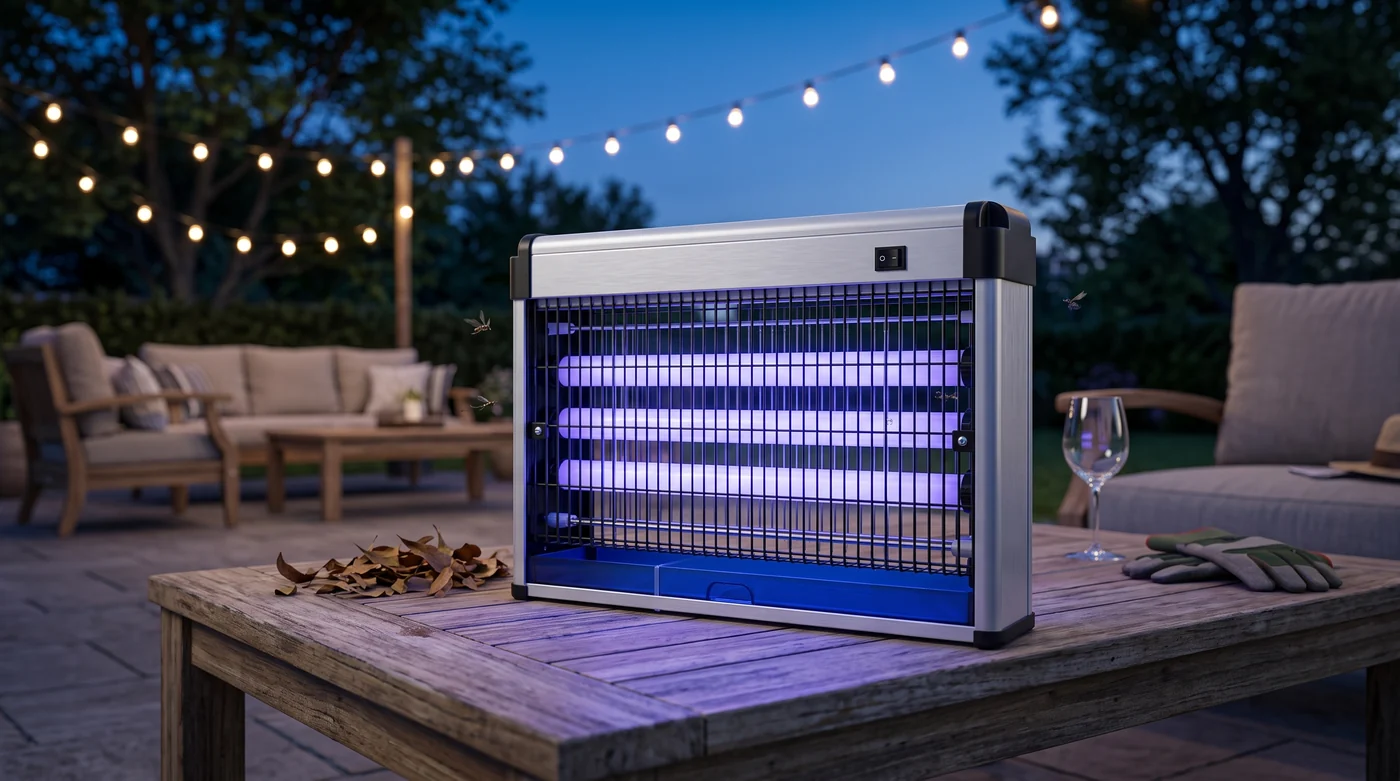
Once activated at dusk, insects drawn toward the central lure encounter an electrified barrier. The device utilizes a 4500V electric shock mechanism paired with durable Stainless Steel grid bars. The high discharge instantly neutralizes pests upon contact, allowing them to fall to the base tray without clogging the internal circuitry.
Read the full guide: Ultimate Guide to Outdoor Bug Zappers: Solar Power, Placement, and Efficiency
The lure works because most night-flying insects are strongly drawn to light sources, especially in dark surroundings with little competing illumination. This is why placement matters so much for solar zappers: hung in a dark yard or campsite, the unit becomes the brightest point insects can see, pulling them away from people and toward the grid instead.
The stainless steel grid is built for the abuse this process creates. Each discharge generates heat and a brief arc at the point of contact, and over a season the bars absorb thousands of strikes along with overnight humidity. Stainless steel resists both the electrical wear and the corrosion, maintaining consistent conductivity where cheaper metals would pit and degrade.
The base tray completes the design. Because the 4500V discharge neutralizes insects instantly rather than leaving them tangled in the wires, debris drops clear of the electrified area and collects below, where it can be emptied in seconds and the grid touched up with the included cleaning brush.