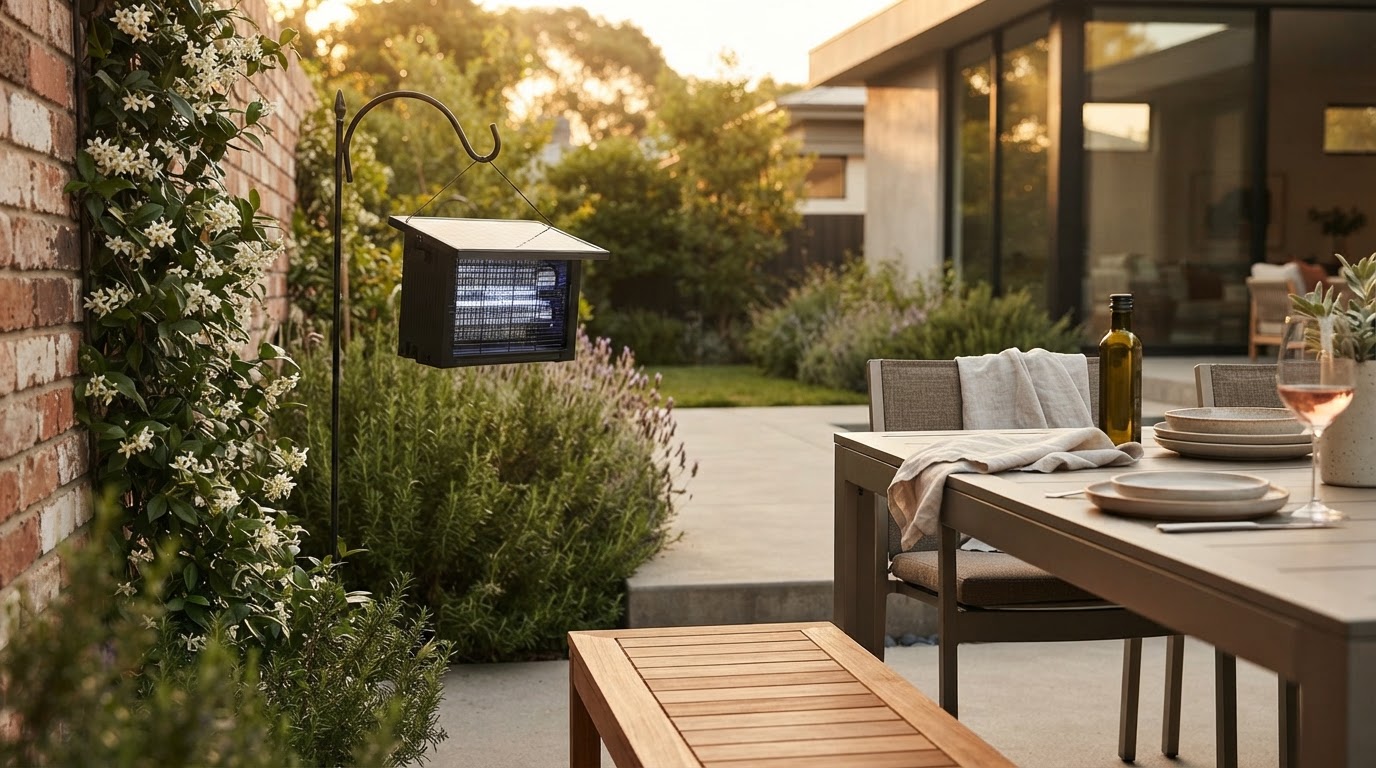
Skepticism Over 4500V Solar Bug Zapper Price Drop
 Maya ChenContributing Editor
October 1, 2026 — The market for portable insect control is currently reacting to a significant price reduction on high-voltage solar hardware. According to Slickdeals.net, BlueOcean Ventures via Amazon has listed the 4500V Solar Bug Zapper with dual solar panels and a 4000mAh battery for $40.19, a 40% reduction from its $66.99 MSRP when using a promotional code.
The conventional wisdom says that a higher voltage rating and a larger battery capacity automatically equate to better field performance. However, here's the part nobody talks about: the efficiency of dual solar panels on a device this size rarely matches the discharge rate of a 4500V shock mechanism in high-activity areas. Run the math: a 4000mAh battery provides significant storage, but recharging that capacity via small-form-factor solar panels requires ideal UV conditions that most wooded campsites simply do not provide. While the Outdoor Bug Zapper offers a wireless solution for mobility, the reliance on automated sensors to preserve power suggests that the 4500V output is a peak burst rather than a sustained draw.
Data from Slickdeals.net indicates the deal includes free shipping, lowering the barrier to entry for casual users. Yet, for those prioritizing long-term durability, the hardware specs raise questions about the longevity of the transformer under frequent 4500V discharges. Users often overlook the battery cycle life in favor of raw voltage numbers. If you are planning to use this for extended camping trips, the internal 4000mAh reserve is your primary asset, not the solar replenishment rate.
Expert tip: To maximize the utility of a solar-powered unit, manually charge the device via USB before heading into the field. Do not rely on the solar panels for the initial fill; treat the solar component as a trickle-charger intended only to offset the power used by the automated dusk-to-dawn sensors rather than a primary power source for the 4500V grid.
I'll change my mind when field testing proves the dual-panel array can recover at least 30% of the 4000mAh battery capacity within a standard six-hour window of indirect sunlight. Until then, this remains a budget-friendly convenience tool rather than a robust industrial solution for heavy pest infestations.