Solar Bug Zapper Market Shifts as 4500V Units See Price Cut
 Priya RamanSenior Analyst
August 7, 2026 — Recent market shifts have introduced high-voltage portable solutions to a broader consumer base following a significant price reduction on 4500V solar-powered units. According to Slickdeals.net, BlueOcean Ventures via Amazon has discounted the 4500V Solar Bug Zapper with dual panels and a 4000mAh battery to $40.19, utilizing a 40% promotional code. This development necessitates a structured framework for evaluating outdoor pest control efficiency. Think of it as a matrix of two primary axes: power intensity (voltage) and energy autonomy (battery/solar capacity).
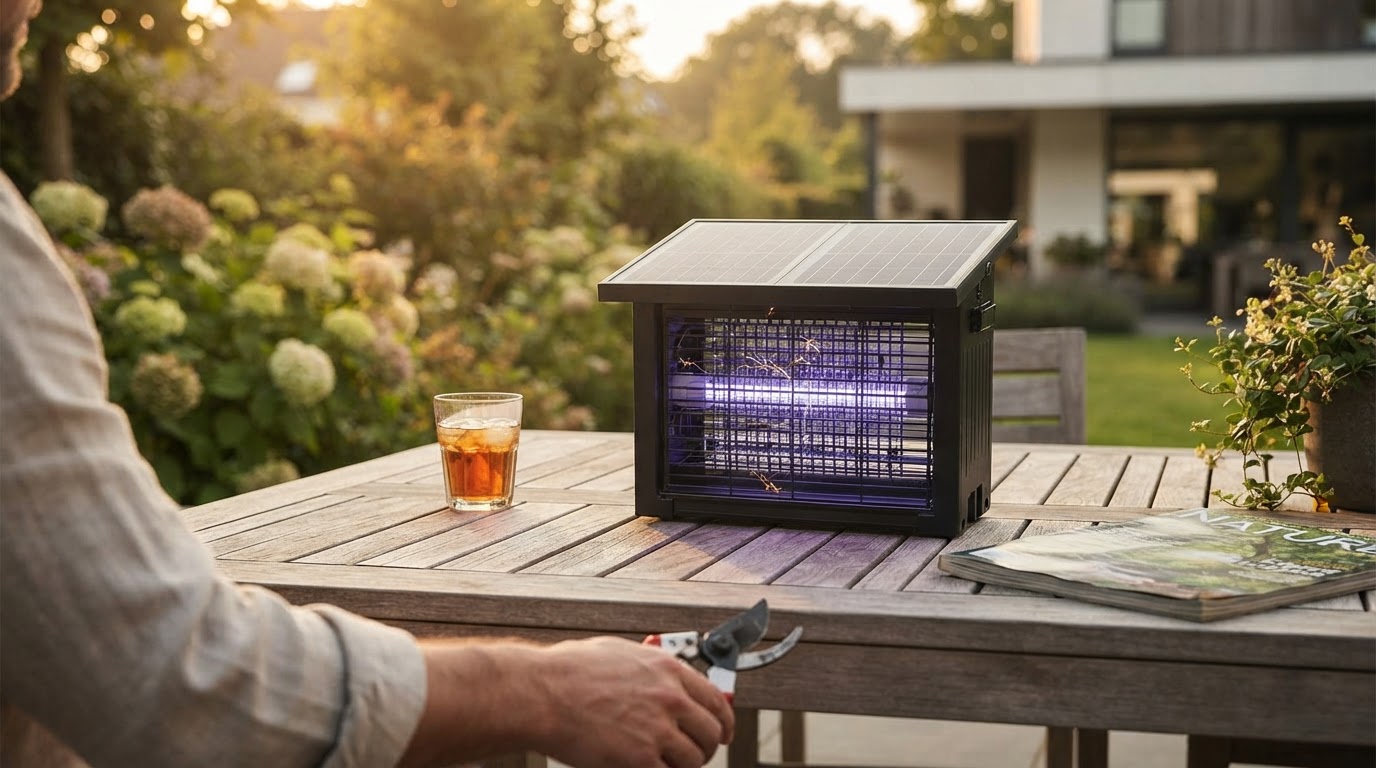
Two axes matter here: the vertical axis measures the lethal force required for varied insect species, while the horizontal axis measures the device's operational longevity in remote environments. Once you see it this way, the value proposition of a 4500V unit becomes clear. While standard devices often hover around 2000V, the Outdoor Bug Zapper architecture prioritizes a 4500V shock mechanism to ensure effective elimination of larger pests in one contact. This high-voltage capability, paired with dual solar panels, places these units in the 'High Efficiency, High Autonomy' quadrant of our market model.

Photo by Daniil Ustinov on Pexels
According to Slickdeals.net, the specific unit on sale features a 4000mAh battery, which is critical for maintaining the grid's charge during peak nocturnal insect activity. For those managing larger properties, understanding effective zapper placement is essential for maximizing the dual-panel charging potential. Furthermore, users should consider how weatherproof ratings impact the longevity of solar sensors. The Outdoor Bug Zapper design integrates a panel sensor for automated operation, moving the device from a manual tool to a passive infrastructure component.
Expert tip: When utilizing a 4500V device with a 4000mAh battery, clean the internal grid weekly with a non-conductive brush. High-voltage arcs can leave carbon residue that reduces efficiency, particularly when the solar charging cycle is interrupted by debris. Maintaining a clear grid ensures the battery discharge rate remains consistent throughout the night.
The decision rule: If your environment requires portability without access to AC power, prioritize the 4500V/4000mAh configuration to ensure the shock intensity does not degrade as the battery drains.