Why Isn't My Solar Bug Zapper Working? Field Fixes That Actually Help
Most solar bug zapper failures in the field are not failures at all. In order of frequency, the causes are a shaded panel, a dirty panel or grid, a unit placed where insects were never flying, and a charge that never fully recovered from the previous night. All four are fixable on site in a few minutes, with the unit switched off, and none of them require opening anything.
Start here: switch it off before you touch it
These devices carry a high voltage across an exposed grid by design. Before any inspection, cleaning, or repositioning, switch the unit off and set it down out of reach of children and pets. Never put fingers, sticks, wires, keys, or cleaning tools into or through the grid. Do not open the housing, and do not attempt to service a unit that is wet — let it dry fully first. Follow the instructions supplied with your specific model; they take precedence over anything general written here.
Every step below assumes the unit is off.
Symptom-to-cause table
Photo by Taylor Thompson on Pexels
| What you observe | Most likely cause | Field fix | |---|---|---| | Never switches on at dusk | Battery too low from a poor charging day | Give the panel the most open spot on site for a full day | | Switches on late or erratically | Sensor area shaded or dirty | Wipe the panel and sensor area; clear anything sitting beside it | | Runs at dusk, dead by midnight | Partial charge only | Move panel out of dappled shade; expect shorter runs in overcast weather | | Running but almost nothing caught | Placement, not the device | Move to the downwind perimeter, above head height, away from seating | | Weak or no snap when insects hit | Grid fouled with debris | Clean per the manual with the unit off; clear the collection tray | | Charge fades over the season | Normal storage and cycling effects | Store charged and dry; avoid long storage at empty | | Stops working after heavy rain | Moisture in or on the unit | Dry fully before use; follow the model's stated weather guidance |
Why a panel that "looks fine" is usually the problem
Solar output tracks the intensity of light reaching the panel, which is a much narrower thing than a spot looking bright. A panel in dappled shade under a tree collects a small fraction of what the same panel collects in open sun, and the difference does not register visually. Three checks resolve most charging complaints:
- Open sky, not just brightness. Stand where the unit sits and look straight up. If branches, a tarp, or an awning cover most of that view, the panel is being starved.
- Midday exposure, not morning exposure. Shade moves. A spot that is sunny at nine can be under canopy by noon, and midday is when most of the collection happens.
- A clean surface. Pollen, dust, dried rain spots, sap, and campfire soot all cut output. A dry cloth over the switched-off unit is enough; abrasive pads and solvents are not appropriate.
Solar bug zapper panel sensor fix: what can and cannot be done in the field
The sensor reads falling ambient light and switches the unit on. There is nothing to calibrate, so field work is limited to removing whatever is interfering with the reading.
A unit that starts on manual but never on automatic points at the sensor. A unit that will not start at all on either points at charge. That fork is the fastest diagnostic in the whole process.
Outdoor zapper battery maintenance that actually extends life
Rechargeable cells in outdoor devices lose capacity fastest when they sit empty, sit hot, or get cycled deeply over and over. Practical habits:
- Store it charged. At the end of a season, leave the unit in daylight for a day before packing it away rather than storing it flat.
- Store it dry and indoors. A garage shelf is better than a shed roof; extreme heat is harder on cells than mild cold.
- Top it up during long storage. A day in the sun every couple of months during the off-season keeps the cell from sitting at empty for months.
- Do not leave it in a hot vehicle. A closed car in summer is the harshest environment most of these units ever see.
- Expect gradual decline. Shorter nightly runtime after a few seasons is normal wear, not a fault.
When the device is fine and the placement is wrong
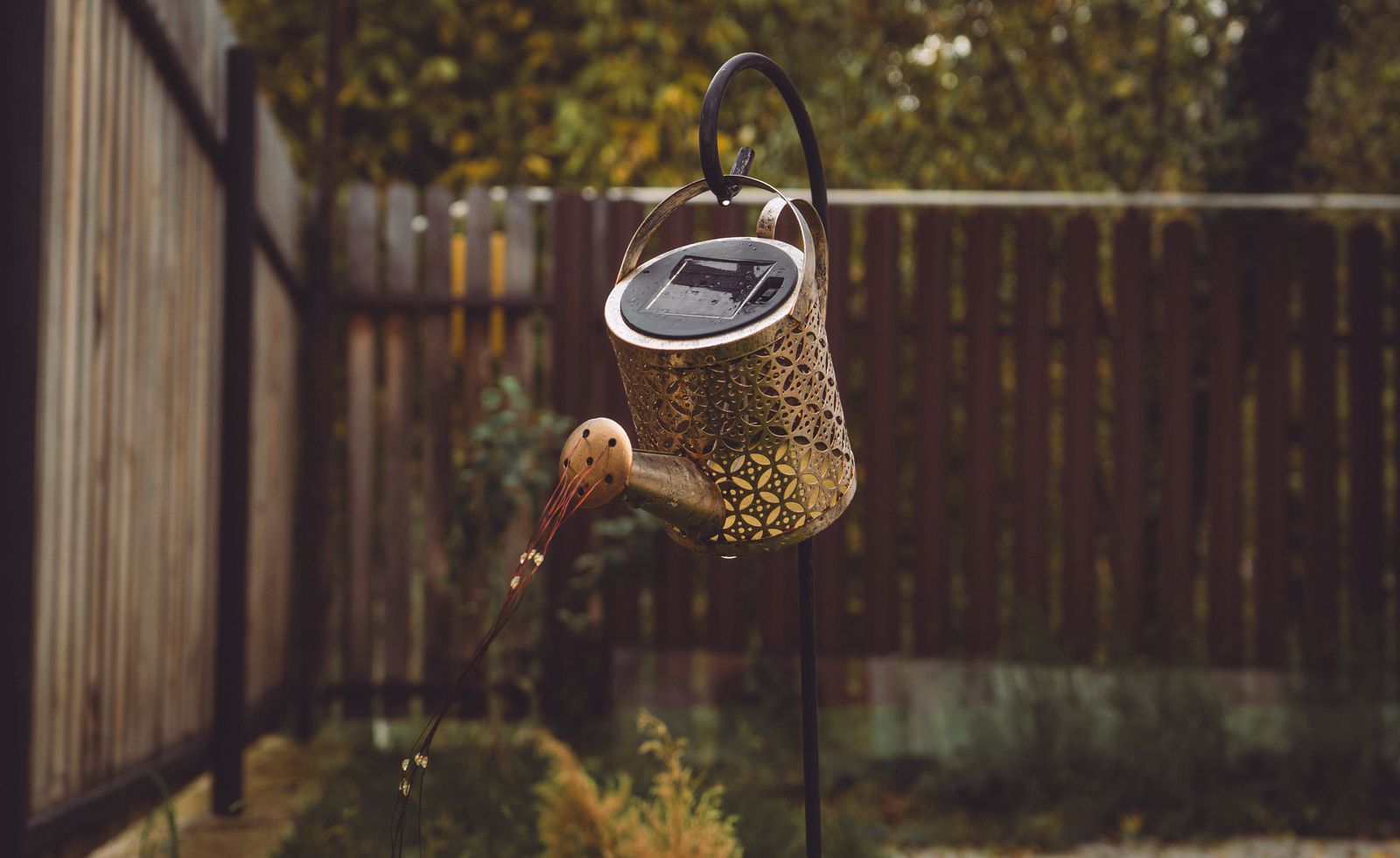
Photo by Gurgenidze G on Pexels
A working unit that catches almost nothing is usually placed badly. The zapper competes for insect attention against the strongest attractants nearby — people, food, and light — and it loses if it is sitting among them.
For more on positioning, see tips for a bug-free campsite perimeter. For how the discharge mechanism behaves under test conditions, see testing the outdoor insect solar 4500V electric shock mechanism.
Cleaning and end-of-trip routine
A five-minute routine prevents most in-field problems on the next trip.
Keep expectations calibrated as well. A zapper thins insect traffic through an area; it is not personal protection, and it should not be relied on to reduce the risk of insect-borne illness. Clothing, an appropriate repellent, and mesh do that job. Background on handling high-voltage insect devices safely is covered in the guide to using an electric mosquito swatter.
FAQ
Why does the zapper work at home but not at the campsite? Almost always light and placement. A patio usually offers open sky and a consistent daily charge; a wooded site often offers neither, and the perimeter geometry is different. Find the most open patch on the site for daytime charging and move the unit away from seating at night.
How can you tell whether the panel or the battery is the problem? Give the unit a full day in genuinely open sun, then watch it at dusk. If it starts and runs a normal stretch, charging conditions were the issue. If it still will not start after a good charging day, the cell or the control circuit is the likelier cause, and that is a warranty or support question rather than a field repair.
Is it safe to clean the grid? Only with the unit switched off, only after it has been off long enough to be handled per the manual, and only using the method the manufacturer specifies. Never insert objects into the grid, never clean a wet unit, and never open the housing.
Should a solar zapper run all night? Not necessarily. Biting activity concentrates around dusk and dawn, so spending a limited charge on those windows is more useful than trying to cover the whole night. Running only during peak windows also reduces the number of harmless insects the grid takes.
What to do next
Run the two-minute triage the next time the unit underperforms: switch it off, look straight up from where the panel sat that day, wipe the panel, and then check whether the unit was ten paces from the picnic table or right beside it. Those two observations — sky above the panel, distance from people — explain the large majority of complaints, and both are free to fix.
Cover photo by Matheus Bertelli on Pexels.