Solar Bug Zappers vs Chemical Repellents: Which Is Best?
Choosing the right outdoor insect protection strategy often comes down to physical elimination devices versus topical chemical sprays. Comparing the Outdoor Bug Zapper against traditional repellents helps clarify which option fits your lifestyle.
For more insight on coverage zones and voltage performance, explore the main guide.
Comparing Physical Extermination and Chemical Application
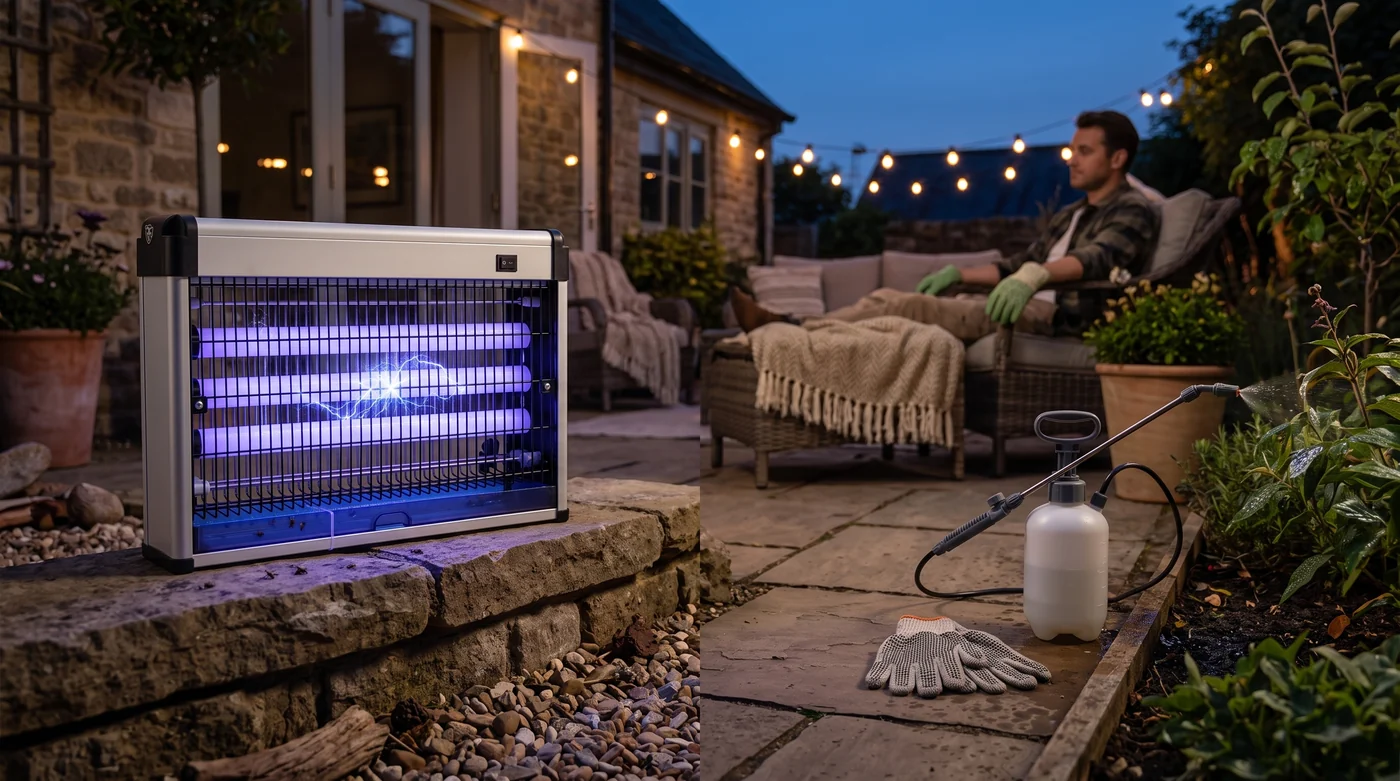
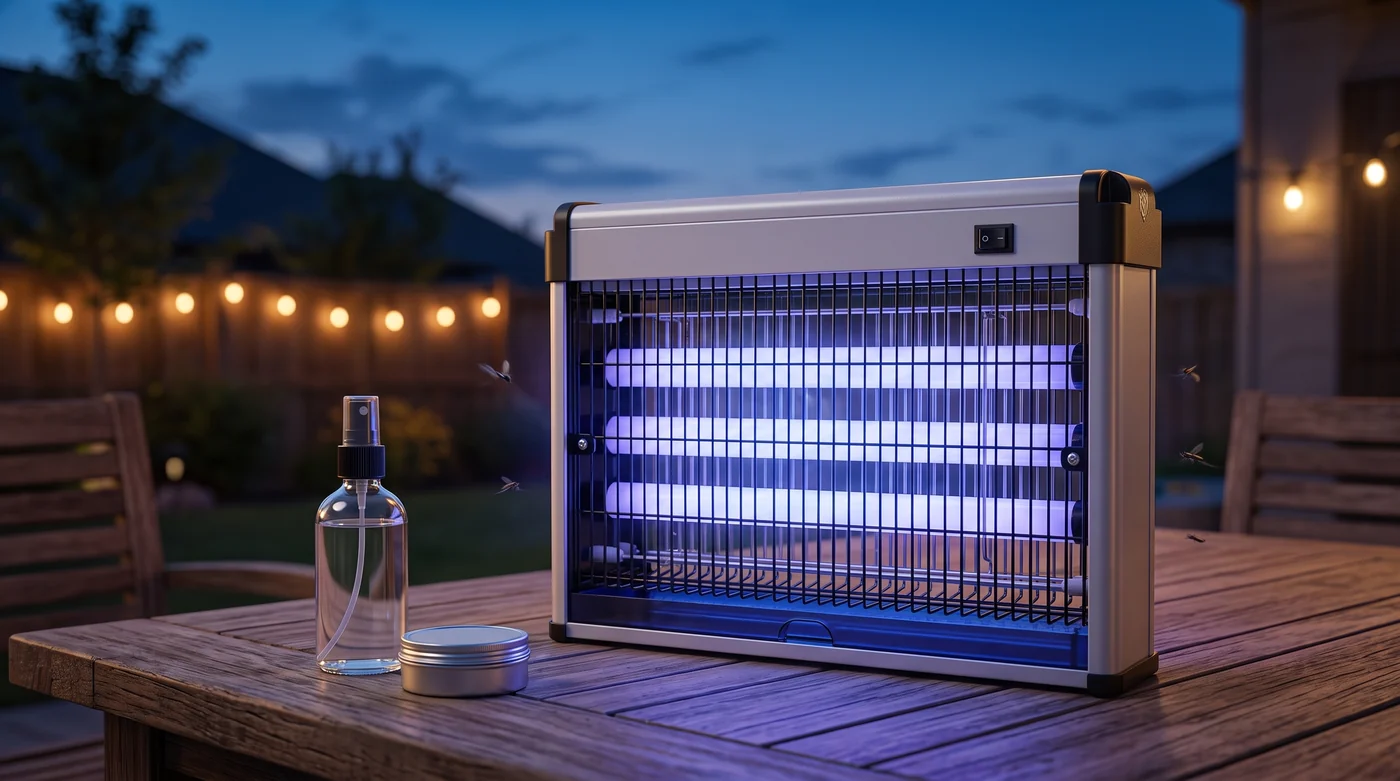
Chemical sprays rely on active ingredients that temporarily mask human scent or repel insects. They require consistent spray reapplication hours, often every few hours depending on sweat and swimming. In contrast, an electric zapper uses physical contact via a 4500V electric shock mechanism to clear bugs permanently from an area. The two approaches also differ in what they actually accomplish. A repellent does not reduce the insect population around your patio — it makes treated skin less appealing while the mosquitoes keep circling, waiting for the active ingredient to fade or for an untreated ankle to present itself. Physical elimination removes each insect from the area permanently, so pressure on the space genuinely drops over the course of an evening.
Coverage works differently too. A spray protects only the person wearing it, which means every guest at a barbecue needs their own application — and food surfaces, drinks, and pets remain uncovered. A single zapper protects the shared space itself, up to 1,000 sq ft of it, without anyone needing to apply, reapply, or even think about it. The integrated dusk sensor switches the unit on as insects become active, so protection is already running when people step outside. For households that entertain regularly, that difference — protecting people one at a time versus protecting the space itself — is the practical dividing line between the two approaches.
Cost Efficiency and Reapplication Schedules
- Topical Sprays: Consumable products requiring recurring purchases, aerosol disposal, and sticky skin application.
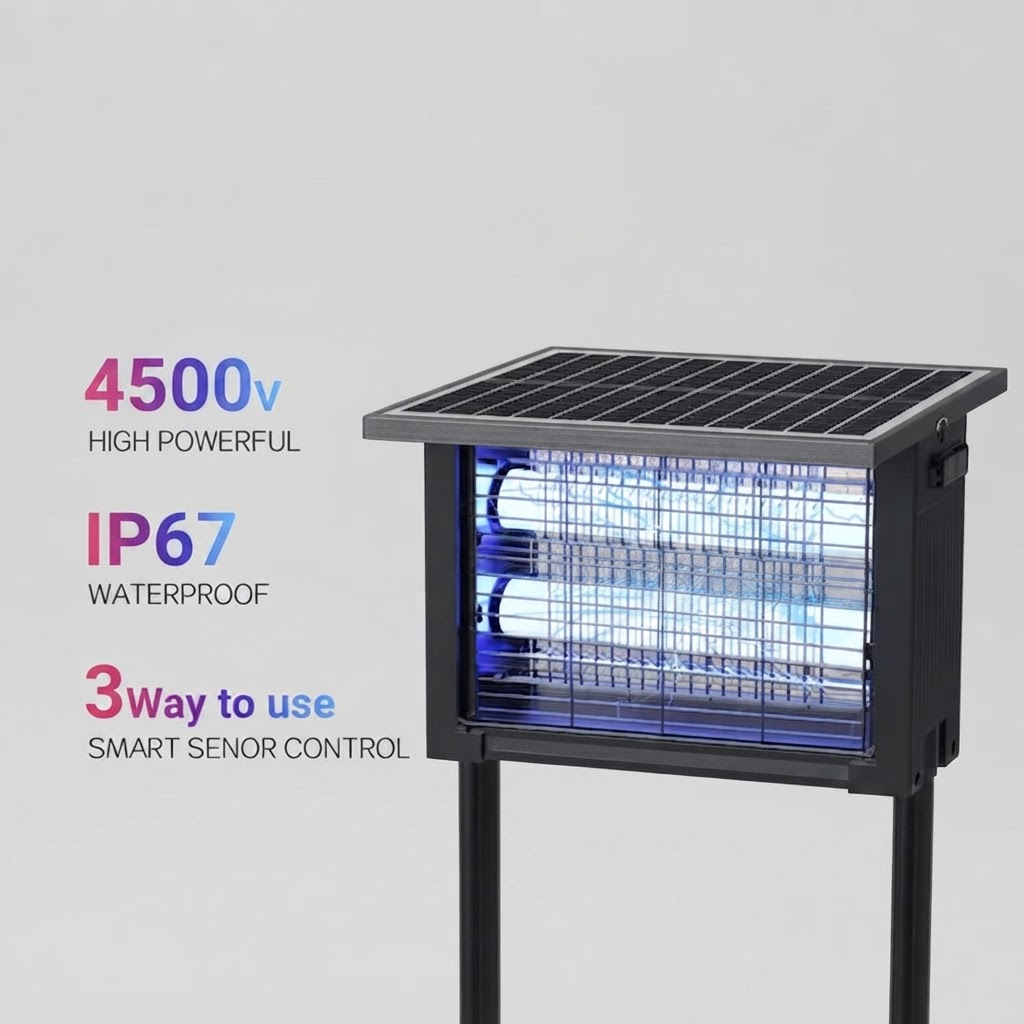
- Solar Bug Zapper: A single hardware purchase that recharges freely using solar energy. A charge time of 6-8 hours yields 8-12 hours of nightly operation without recurring consumable costs.
There is also the convenience ledger. Sprays interrupt the evening — someone has to remember the can, apply it to everyone, wash it off before bed, and repeat the cycle every few hours as it wears away. The zapper's routine is fully automated: the panel charges by day, the sensor activates the grid at dusk, and the unit shuts down at dawn. The time spent managing pest control drops to nearly zero, which is its own form of return on a busy summer schedule.
Weather adds one more line to the ledger. A rain shower washes repellent off skin and forces a fresh application once it passes, while the IPX4-rated zapper simply keeps running through the same shower. Over a full season of unpredictable evenings, the hardware approach absorbs the interruptions that force spray users to start over.
Environmental Durability and Usability
Unlike sprays that wash away in rain, an IPX4 waterproof rating allows physical zappers to remain outdoors during damp weather. Featuring a Stainless Steel grid and a lightweight 2 lbs casing, solar zappers provide a durable, chemical-free alternative for family-friendly outdoor spaces.
Read the full guide: Ultimate Guide to Outdoor Bug Zappers: Solar Power, Placement, and Efficiency
Portability extends the comparison beyond the backyard. Sprays travel, but they run out fastest exactly when they are needed most — on camping trips, at the lake, anywhere insects are thick and stores are far away. The zapper's portable and wireless design covers those same trips on one piece of hardware: at 2 lbs it packs easily, hangs from a branch at camp, and recharges from the sun with no outlet in sight.
For families, the chemical-free angle is often the deciding factor. There is nothing to apply to children's skin, nothing washing off into the pool, and no residue settling on outdoor dining tables. The device does its work at a distance — hung 6-8 feet up and away from the seating area — while people simply enjoy the space. Between the stainless steel grid and the IPX4-rated housing, it is built to keep delivering that arrangement season after season.