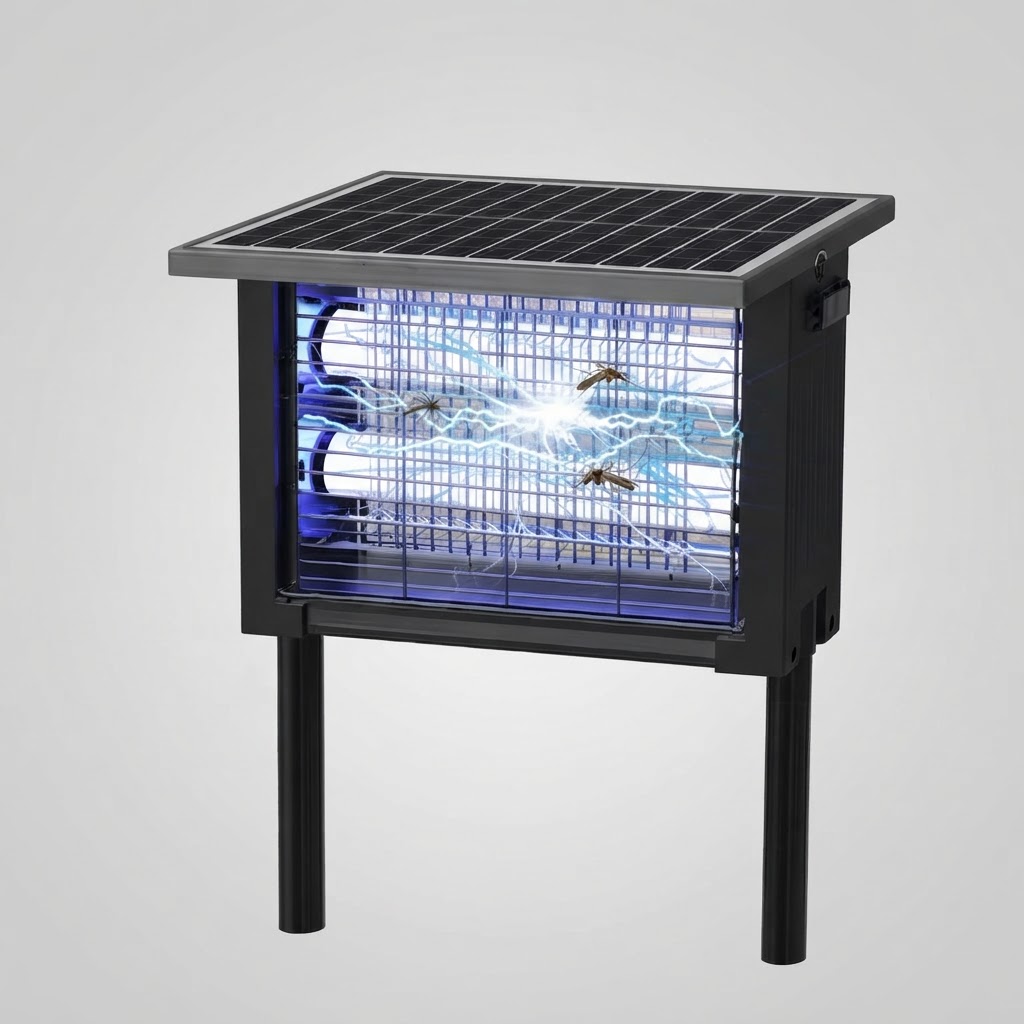
Ultimate Guide to Outdoor Bug Zapper Tech and Placement
Managing flying insects in outdoor living spaces requires understanding both device specifications and proper installation tactics. The Outdoor Bug Zapper provides a portable and wireless design that relies on modern solar charging to deliver persistent insect control across a coverage area of 1,000 sq ft.
Introduction to Solar Pest Control
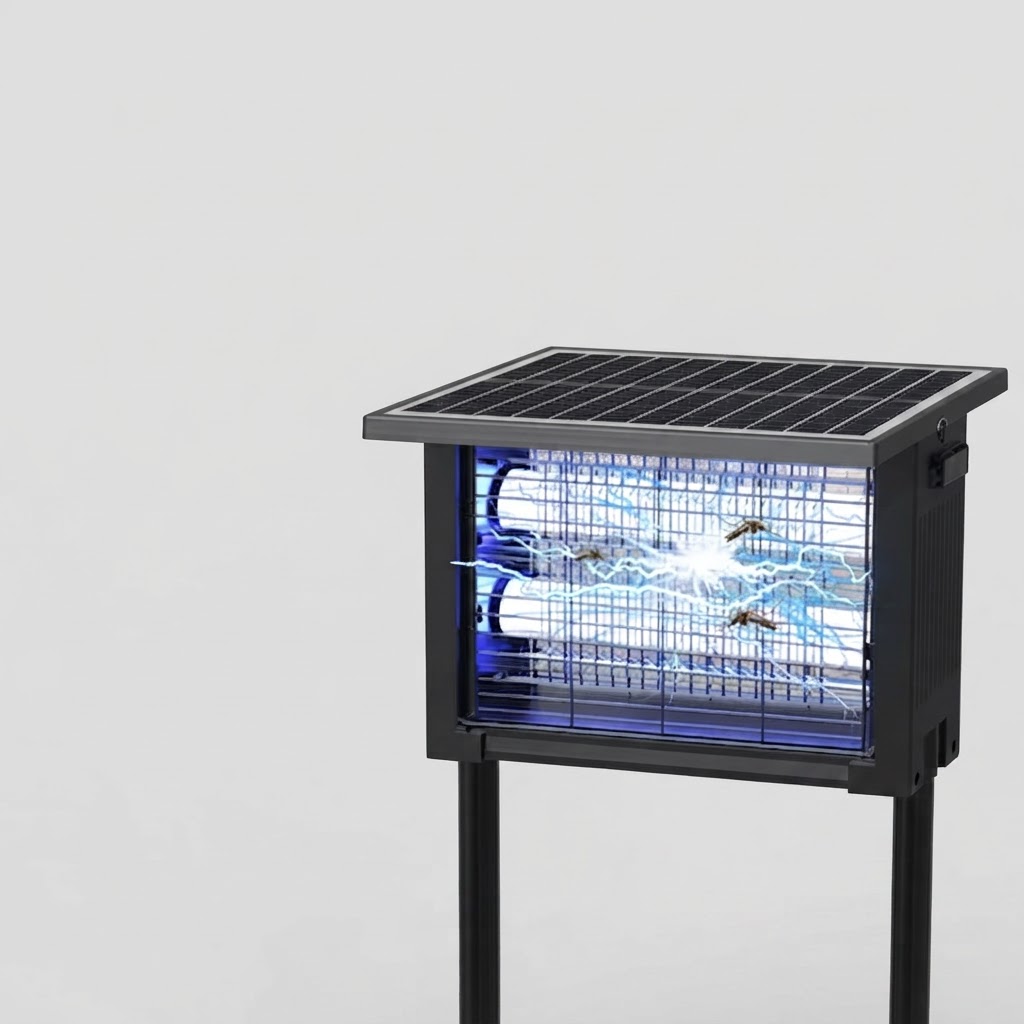
Traditional pest management relies heavily on chemical sprays or tied-down electrical extension cords. A wireless alternative allows campers and homeowners to establish a protective barrier without relying on power outlets. This outdoor insect control device features a powerful 4500V electric shock mechanism designed to eliminate pests effectively, utilizing a portable structure built for outdoor conditions. It is worth setting expectations at the outset, because this is a product category where the marketing and the entomology have historically disagreed.
Ultraviolet light attracts a very wide range of flying insects, but mosquitoes are not strongly among them. Mosquitoes locate hosts primarily by carbon dioxide, body heat, and skin odour, none of which a light provides. Studies of light-based traps in domestic gardens have repeatedly found that the overwhelming majority of what they catch is other insects, many of them harmless or beneficial, with biting species making up a small fraction.
That does not make the category useless, but it does change what it is useful for. A UV unit is effective against moths, midges, flies, and the general cloud of insects that gathers around a lit patio on a summer evening. For mosquitoes specifically, units that also emit carbon dioxide or use an attractant lure perform considerably better, and simple measures like eliminating standing water do more than any device.
Buying one with that understanding tends to produce satisfaction; buying one expecting a mosquito-free garden tends not to.
Key Specs and Performance Capabilities
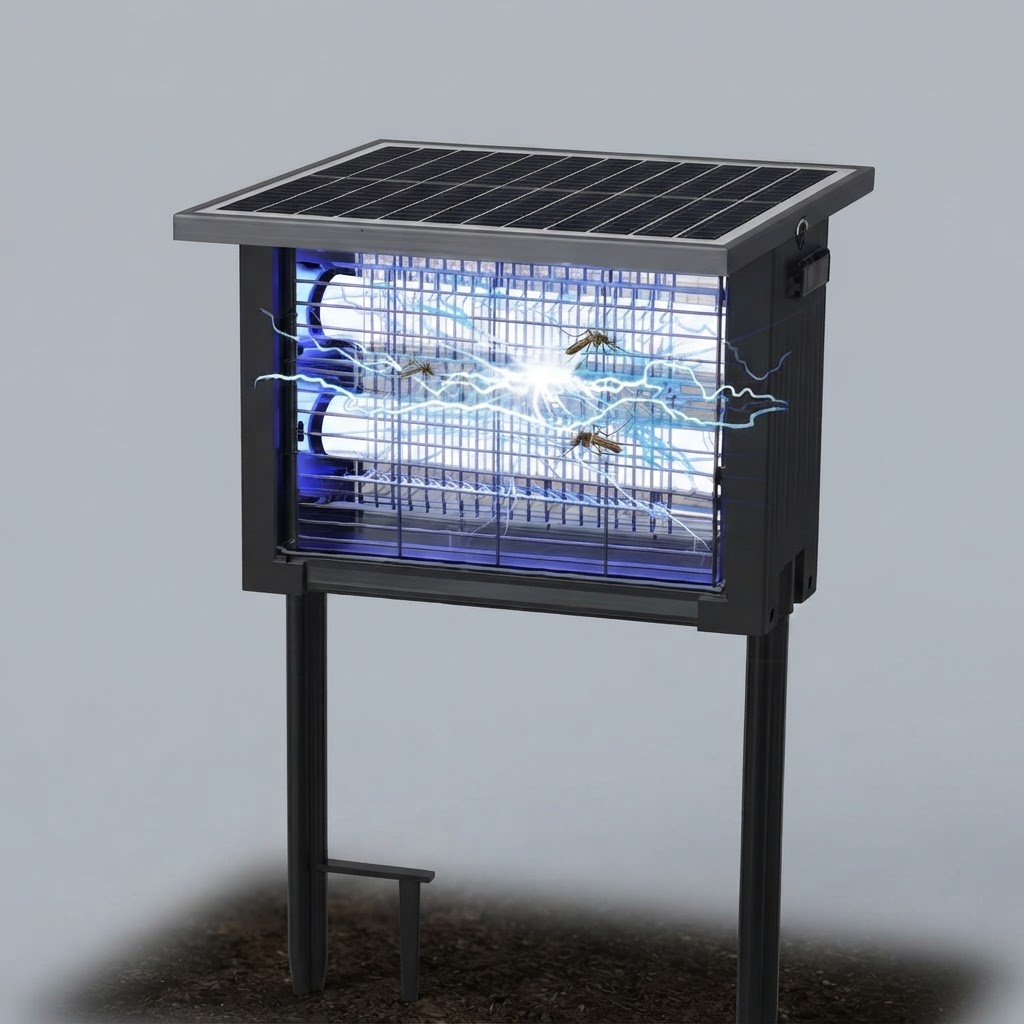
When evaluating bug zappers, high voltage and efficient power delivery are crucial. The 4500V electric shock mechanism ensures immediate impact upon contact. Despite this power, the device maintains a portable footprint, with a overall product weight of 2 lbs.
Key performance specs include:
- Grid Power: 4500V electric shock mechanism
- Overall Weight: 2 lbs
- Effective Range: Coverage area of 1,000 sq ft
- Grid Material: Stainless Steel
Coverage area is the one to read most sceptically. Quoted figures generally assume an open, unobstructed space with the unit as the only light source, and they describe the radius over which the light is visible to insects rather than the area from which they will be removed. A hedge, a fence, or a brighter patio light nearby all reduce it substantially.
The light wavelength matters more than the wattage. Insect attraction peaks in the ultraviolet range around 365 nanometres, which is why a dedicated UV tube outperforms a brighter conventional bulb.
On a solar unit, battery capacity is what determines whether it runs through the evening or gives up at eleven, and the evening hours after dusk are when most flying insect activity occurs. A unit that runs three hours from dusk covers the useful window; one that manages ninety minutes largely misses it.
Strategic Placement for Maximum Effectiveness
Proper placement ensures insects are drawn away from human activity zones rather than into them. To achieve optimal performance:
Place it at the perimeter instead, roughly six to twelve metres from where people sit, positioned so insects approaching from open ground or from a hedge line encounter it first. The aim is to intercept, not to defend.
Height matters too. Most flying insects travel between about one and a half and two metres above ground, and a unit hung at that height performs better than one at ground level.
Two further considerations. Turn off or dim competing lights nearby, since a bright porch light will simply outcompete the unit. And on a solar model, the panel needs daytime sun while the unit needs to hang somewhere useful at night, which is the usual conflict; a model whose panel is separate or which can be moved between day and night positions sidesteps it.
Solar Energy and Power Management
Powering an off-grid device requires efficient energy capture. This unit is solar energy powered, utilizing an integrated panel sensor for automated operation. During peak daylight, the solar panel sensor detects light levels to charge the internal power cell.
- Full Solar Charge Time: 6-8 hours under direct sunlight
- Continuous Run Time: 8-12 hours on full charge
- Internal Battery Type: 8-12 hours
- Automatic Dusk Activation: Controlled by integrated panel sensor
UV emission is comparatively power-hungry, which is why solar zappers tend to run for a few hours rather than all night. That is less of a limitation than it sounds, since insect activity concentrates in the hours after dusk, but it does mean the unit will usually be off by the small hours.
Seasonal behaviour works in your favour here, unusually. Peak insect season coincides with the longest days and strongest sun, so charging is at its best exactly when the unit is most needed. The corollary is that performance in spring and autumn is noticeably weaker.
If run time is short, work through the same causes as any solar product: wipe the panel, check for shade from planting that has grown, and consider the age of the battery, which declines over a few seasons.
Weather Resistance and Durability
Outdoor equipment must endure fluctuating environmental conditions. The Outdoor Bug Zapper features an IPX4 waterproof rating, offering protection against splashing water and light rain showers. This weatherproofing prevents short circuits during sudden downpours, making it ideal for camping and outdoor use. Check the IP rating, remembering that the second digit describes water protection. IP44 covers splashing and suits a sheltered position under an eave or a pergola; IP65 handles driving rain and suits an exposed hanging position in open garden.
The specific vulnerability in this category is the electrified grid itself, and it is worth understanding. A grid that is wet or bridged by accumulated insect debris can short, which at best stops the unit working and at worst damages it. That is why regular cleaning is a functional requirement rather than a cosmetic one, and why a unit designed with a roof or shroud over the grid tends to last longer in an exposed spot.
Housing material matters over years rather than months. Plastics degrade under ultraviolet light, and a unit that is itself emitting UV and sitting in summer sun gets a double dose, so an untreated housing will grow brittle within a few seasons.
Maintenance and Season Storage
To ensure consistent performance over multiple seasons, periodically brush off the internal grid using a Included. Before long-term winter storage, clear all debris from the solar panel array to preserve solar conversion efficiency.
Cleaning is the maintenance that actually matters. A grid coated in debris performs badly, can short in damp weather, and is unpleasant to deal with once it has been left for months.
The routine is simple. Disconnect or switch off and let any capacitor discharge for a few minutes before touching anything, since these units store a charge. Use the brush that came with it, or a stiff dry brush, and work the debris out of the grid. Empty the collection tray. Never use water on the grid, and never poke anything conductive between the wires.
In peak season, once a week is about right. Less often in shoulder seasons.
For storage, clean it thoroughly first, since leaving organic debris in a unit over winter causes corrosion and an unpleasant surprise in spring. Store it dry and indoors, and if the battery is removable, take it out and store it partly charged rather than flat, which is considerably better for its long-term capacity. A unit left hanging outdoors all winter typically loses a season of battery life for no benefit, since there is nothing to catch anyway.