How to Choose a Portable Solar Insect Killer for Multi-Day Camping Trips
The right portable solar insect killer for a multi-day trip is the one that recharges itself faster than you drain it, switches on without being told, and can be hung at the edge of a site rather than set on the ground. Everything else — grid voltage, styling, extra modes — matters less than those three. This guide lists the criteria worth checking, in the order they actually affect a trip, and the ones that get marketed hard but rarely change the outcome.
The five criteria that decide whether a unit is useful off grid
Self-recharge without an outlet. On a trip with no hookup, a unit that only refills from mains power is a unit that stops working. An integrated solar panel and internal battery is the whole point of the category, and the practical question is whether the panel gets enough exposure where you camp — not what the panel's headline figure says.
Automatic dusk operation. Biting activity peaks in a narrow window around dusk, which is also when people are cooking or setting up. A unit with an integrated panel sensor reads the light level and starts on its own, so nobody has to leave the fire to switch it on. Manual-only units work, but in practice they get switched on late.
Genuinely cordless placement. A wireless unit can be hung from a branch, a pole, or a guy line at the site perimeter. A corded one lives wherever the cable reaches, which is almost always the wrong place: next to people. Portability is a placement feature, not a convenience feature.
Grid strength. The grid needs to reliably discharge across the insects you are targeting. High-voltage designs like the 4500V electric shock mechanism used in the Outdoor Bug Zapper handle a wide size range, from small midges to larger flies. Beyond a certain point, more voltage stops being the limiting factor and placement takes over.
Weather tolerance. Outdoor units get rained on. Check what the specific model you are looking at states about outdoor use and weather exposure, and follow it. Do not assume a rating that is not written down, and do not clean or open a unit that is wet.
What to check before buying: a specification checklist
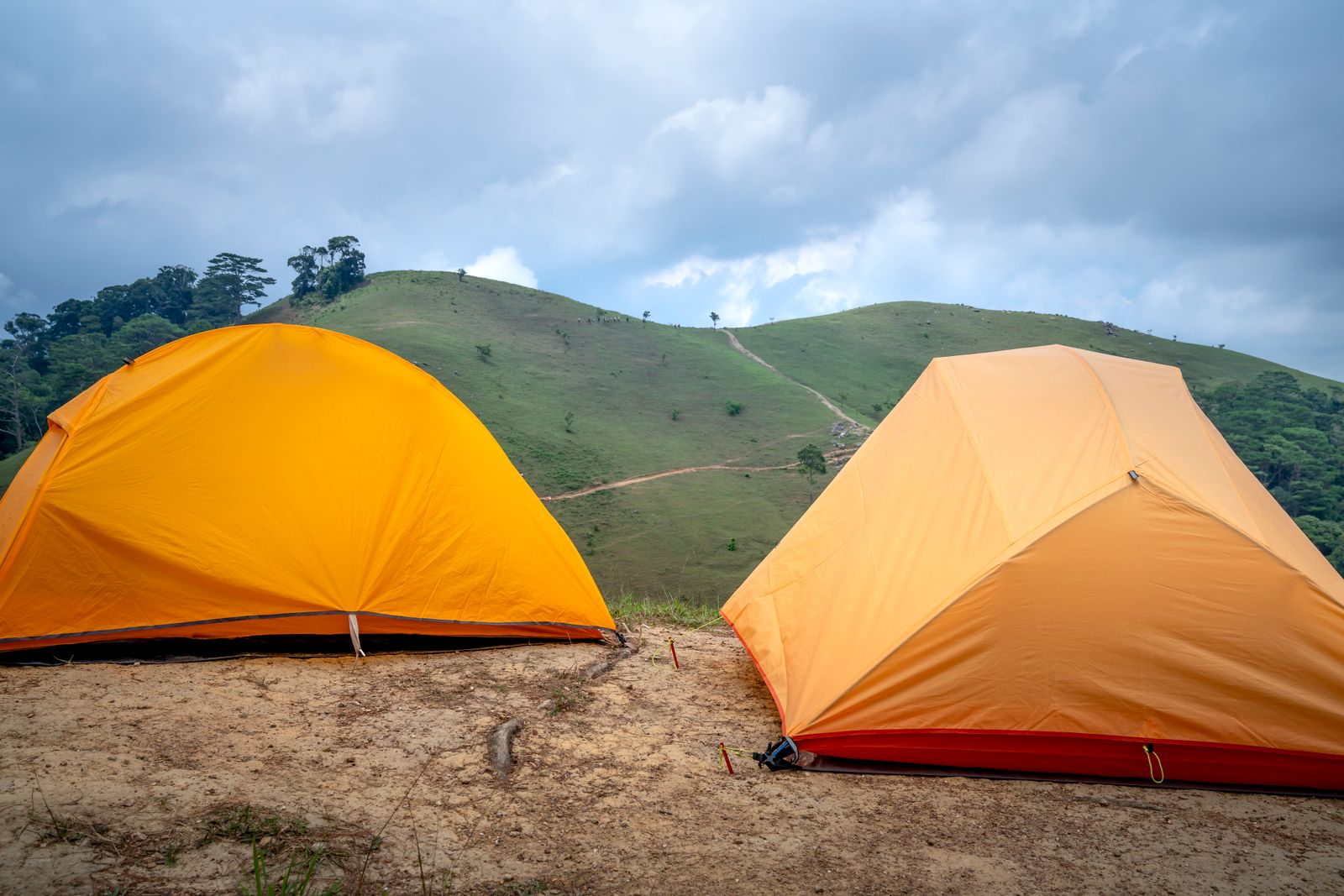
Photo by Quang Nguyen Vinh on Pexels
- Solar charging built in, with a panel that is on the unit and not a separate accessory to lose
- A light sensor or equivalent automatic dusk start
- Fully wireless operation with a hook, loop, or hanger so it can be mounted at head height or above
- A stated grid voltage, so you can compare like with like
- A design that keeps the live grid enclosed behind a guard rather than exposed
- A collection tray or base that can be emptied without touching the grid
- A clear off switch that isolates the grid before cleaning
- Weight and size that fit the way you travel, whether that is a car boot or a pack
- Manufacturer instructions covering outdoor use, cleaning, and storage
Matching the unit to the trip
| Trip type | What matters most | What to skip | |---|---|---| | Car camping, open site, several nights | Solar recharge, automatic dusk start, hangable | Extra spare cells | | Backpacking | Weight, cordless design, no consumables | Anything that needs a cable | | Forested or canyon site | A backup power option, since sun is limited | Reliance on solar alone | | Patio or deck at home | Placement away from seating, easy cleaning | Ultralight construction | | Shed, garage, or workshop | Enclosed grid, stable mounting | Solar, if there is no daylight indoors | | Late-season or winter use | Battery backup, shorter run expectations | Assuming summer runtime |
The most common buying mistake is choosing for the trip someone imagines rather than the trip they take. If most nights are spent at a drive-in site with an open sky, a self-charging wireless unit covers it. If most nights are under heavy canopy, no solar unit will perform the way the listing photos suggest.
How to evaluate an off grid mosquito zapper claim
Listings in this category lean on three claims worth translating.
For background on how the solar side of these units works in practice, see the solar powered bug zapper outdoor guide. For how high-voltage grids behave on a real campsite, see the high-voltage camping bug zapper breakdown.
Setting up whatever you buy, in the right order
More detail on perimeter thinking is in the campsite perimeter tips.
Safety before anything else

Photo by Nothing Ahead on Pexels
These devices carry a high voltage across an exposed grid by design. Keep the unit well out of reach of children and pets, and choose a mounting point that cannot be knocked down. Never insert fingers, sticks, wires, or cleaning tools into the grid. Switch the unit off before cleaning, emptying, or transporting it. Store it dry and follow the instructions supplied with the specific model, which take precedence over any general advice. And keep expectations grounded: a zapper is an area device, not personal protection, and it should not be relied on to reduce the risk of insect-borne illness.
FAQ
Is a higher voltage always better for camping? Up to a point. Enough voltage to reliably discharge across a range of insect sizes is what matters, and designs in the 4500V range cover a broad span. Past that, the limiting factor is almost always where the unit is placed and how much competing attraction there is nearby.
Do solar units need to be plugged in at all? A well-designed one does not, and that is the reason to choose the category for off-grid use. Charging it fully at home before departure is still worth doing so the first night is not spent building charge.
Can one unit cover a whole group campsite? Usually not on its own. Coverage falls off with distance, and a large site with multiple tents and several attractants will need either more than one unit or acceptance that the zapper handles one zone. Put the single unit where people spend the evening, upwind of nothing and away from the tent doors.
How do you tell a durable unit from a fragile one? Look at the housing and the grid guard rather than the claims. A rigid outer guard, a solid hanger, and a tray that seats firmly are the parts that survive being packed, dropped, and rained on. Thin, flexing plastic around the grid is the usual early failure point.
What to do next
Write down the three things about your own trips that matter most — number of nights, canopy cover, and whether anyone needs to walk out at dusk to switch something on. Then run any candidate unit against the specification checklist above. A cordless solar unit with an automatic dusk sensor and an enclosed high-voltage grid satisfies most camping cases; anything that fails two or more checklist items is worth passing on.
Safe Handling
The grid inside any bug zapper carries a high voltage whenever the unit is active. Switch the device off before you touch the grid, clean it, move it, or work on the panel, and use the supplied brush rather than your fingers to clear debris. Never push objects through the housing to reach the grid. Site the unit out of reach of children and pets, and follow the instructions supplied with your own device.
Cover photo by Matheus Bertelli on Pexels.