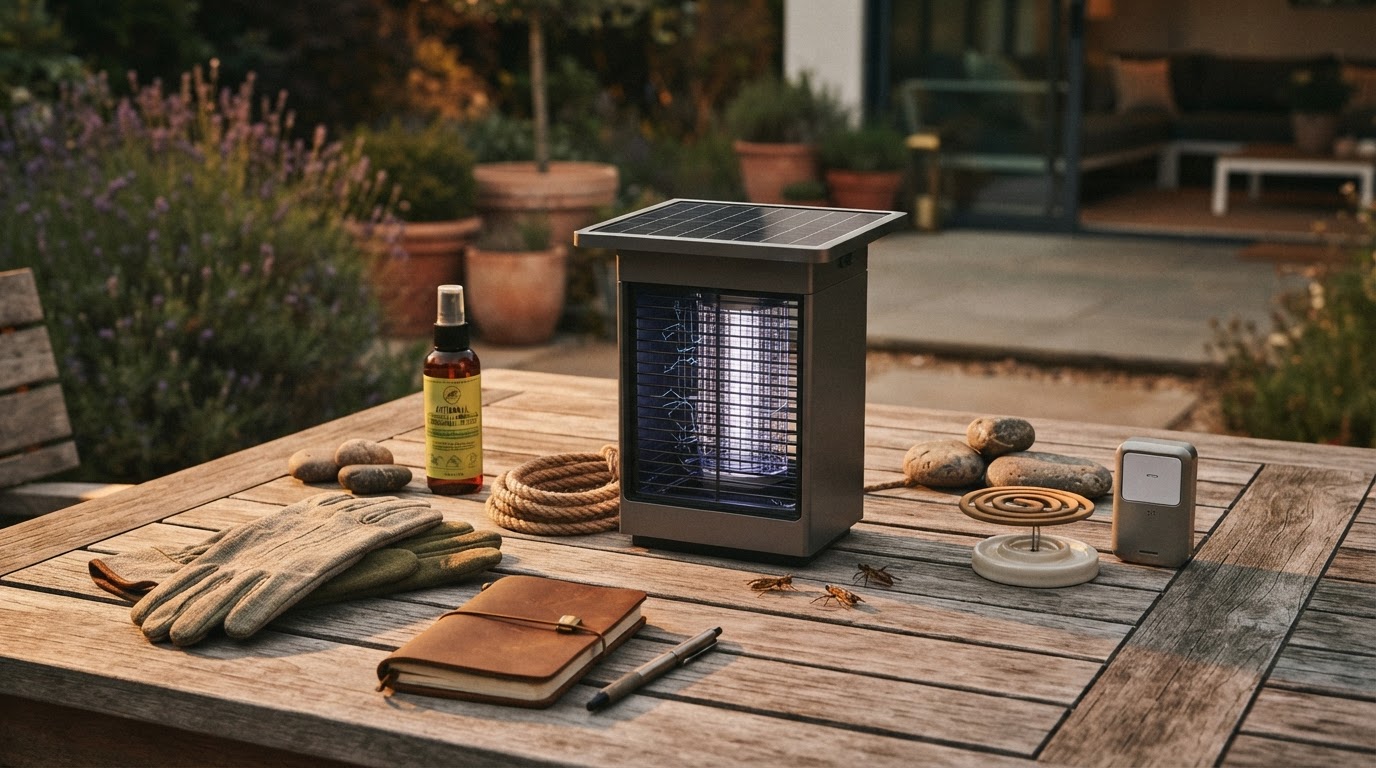
Optimizing Placement for the Outdoor Bug Zapper System
 Priya RamanSenior Analyst
August 3, 2026. This technical analysis explores the physical installation parameters required to maximize the efficacy of a light-based insect management system. It is designed for homeowners seeking to transition from reactive pest control to a structured, perimeter-based defense strategy.
To achieve optimal results with the Outdoor Bug Zapper, think of it as a matrix of attraction and interception. Two axes matter here: the vertical elevation of the unit and its horizontal distance from human activity zones. Most installation failures occur because units are placed too close to the people they are intended to protect, drawing insects toward the gathering rather than away from it. According to Greenscapes, Inc., a professional bug zapper should be positioned at least 15 to 20 feet away from areas where family and friends congregate. Furthermore, their research suggests that units perform most effectively when suspended 5 to 7 feet above the ground. This specific height aligns with the natural flight paths of various nocturnal insects while remaining high enough to avoid accidental contact with children or pets. When these coordinates are ignored, the device may still function, but its statistical impact on the local mosquito population is significantly diminished. Effective placement requires identifying the 'source zones'—such as dense foliage or standing water—and placing the zapper between those zones and your patio.
The Outdoor Bug Zapper is engineered to function within these specific spatial constraints, offering a heavy-duty solution for those managing larger properties or off-grid environments. For users interested in off-grid mosquito control devices, the unit’s power draw and light output are calibrated to provide consistent coverage without requiring constant maintenance. Unlike smaller, decorative lanterns, this system is built for sustained outdoor exposure, making it suitable for mounting on permanent structures. As demonstrated in technical guides by Flowtron, mounting options can vary from shed walls to dedicated poles. One effective method involves using a garden shepherd's hook or a decorative iron bracket, as noted by Best Bee Brothers. These mounting solutions allow for precise positioning in the center of a lawn or along a perimeter fence where traditional wall mounts might be unavailable. Once you see it this way—as a strategic barrier rather than a centerpiece—the logic of placing the unit in a darker, more remote corner of the yard becomes clear. The goal is to leverage the ultraviolet attraction to lead insects into a designated 'kill zone' that exists entirely outside the primary social space.
Selecting the final location for your Outdoor Bug Zapper should follow a rigorous decision framework to ensure safety and performance. The decision rule: prioritize the flight path over convenience. If a unit is placed too close to a door, it may inadvertently lure insects into the home when the door is opened. Instead, focus on the 'interception point' between the nesting area and the entry point. Use the following checklist to audit your intended installation site:
- Confirm a distance of 20 feet from the primary seating or dining area to prevent 'lure-in' effects.
- Verify a mounting height of 5 to 7 feet to intersect standard insect flight altitudes.
- Ensure the unit is visible from 360 degrees, avoiding placement behind thick pillars or dense shrubbery.
- Check that the mounting surface, whether a shed or a shepherd's hook, is stable and capable of withstanding wind loads.
- Position the device away from competing light sources, such as bright security floods, which can wash out the UV attraction.
- Identify a power route that avoids trip hazards while maintaining proximity to a grounded outdoor outlet.
Sources
Photo by Oliver Schröder on Pexels
- Bug zapper placement and safety concerns
- How to Install an Outdoor Flowtron Bug Zapper
- Where to Place A Bug Zapper?