The Ultimate Guide on How to Keep Mosquitoes Away While Camping
The Ultimate Guide on How to Keep Mosquitoes Away While Camping
Camping under the stars offers an unmatched escape into nature, but swarming mosquitoes can quickly turn a peaceful retreat into an uncomfortable ordeal. Understanding effective pest management is crucial for any outdoor enthusiast. To maintain a bite-free zone around your tent or RV, you need a multi-layered defensive strategy combining campsite selection, physical barriers, and modern pest control technology.
Understanding Campsite Pest Challenges
Mosquitoes are drawn to warmth, carbon dioxide, dark clothing, and standing water. When setting up camp, identifying moisture traps in your immediate environment is the first step toward effective mitigation. Low-lying marshland, stagnant creeks, and thick damp foliage serve as primary breeding grounds. Choosing elevated ground with consistent breeze provides a natural countermeasure against weak-flying insects.
Site Selection and Natural Barrier Strategies

Photo by Gundula Vogel on Pexels
To minimize exposure, position your primary living zone away from dense brush. Pitching your tent on high ground allows breezes to disperse carbon dioxide plumes naturally. Additionally, pairing wise site selection with smoke from a clean campfire or natural plant scents can reduce mosquito activity around the perimeter.
Passive Insect Defense Techniques
Passive defenses remain essential. High-mesh tent netting keeps insects out during sleep, while long sleeves and lightweight pants protect skin during peak dawn and dusk feeding hours. However, passive methods only protect what they physically shield; they do not clear the surrounding gathering area.
Electronic Insect Eradication for Campers

Photo by Magda Ehlers on Pexels
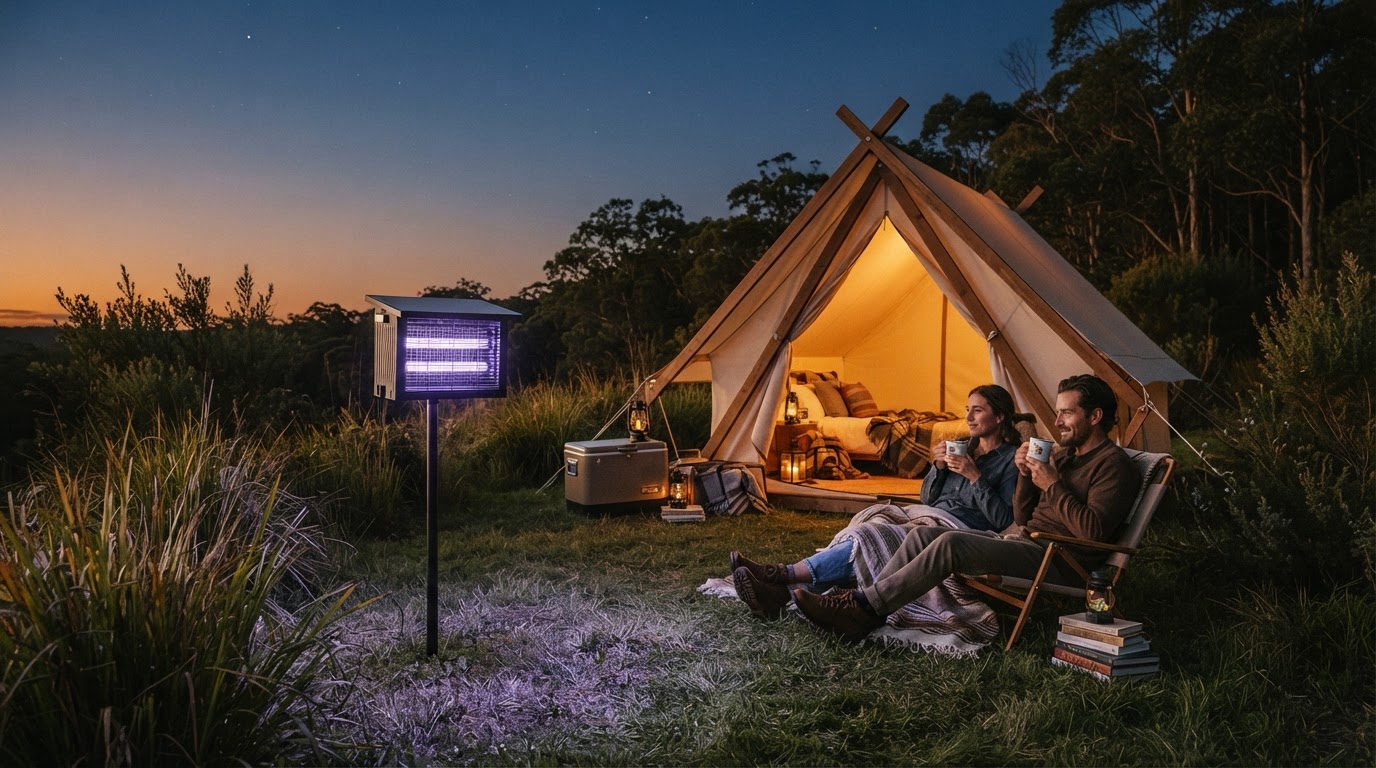
For active clearing, portable electric technology provides a clean, chemical-free alternative. Modern high-voltage equipment, such as an Outdoor Bug Zapper featuring a powerful 4500V electric shock mechanism, actively eliminates pests that enter your perimeter. Because it is built with a portable and wireless design, you can easily hang or stand the device wherever bug density is highest.
Unlike traditional plug-in models, a modern unit relies on solar energy powered systems that charge during daylight hours. Featuring an integrated panel sensor, the unit can automatically illuminate and activate when darkness falls, eliminating manual switching when you are busy around the campsite.
Integrating Solar Tech into Your Outdoor Setup
Integrating renewable technology into your campsite gear streamlines your overall workflow. Securing your solar insect control gear in direct sunlight during the daytime guarantees maximum charge for nighttime performance. Running for approximately 8-12 hours on a full charge, it provides sustained protection across a 1,000 sq ft perimeter without requiring heavy extension cords or generator power.
Maintenance and Trail Safety Practices
Keeping your equipment operational requires minimal effort. Periodically clear the internal grid using a small brush once the unit is powered off. Ensure the integrated sensor remains free of mud and dust. Weighing only 2 lbs, these compact units easily pack alongside your standard shelter and cooking gear. By combining smart site selection, appropriate clothing, and advanced electronic elimination, you can ensure a peaceful, bug-free outdoor experience.
Related in this cluster
- 5 Essential Tips for Creating a Bug-Free Campsite Perimeter
- How to Set Up Solar Bug Zappers at Your Campsite
- Solar Bug Zappers vs. Chemical Sprays: Which Is Best for Camping?
- Why a 4500V Outdoor Bug Zapper Is a Camping Game-Changer
- Camping Bug Zapper FAQ: Everything You Need to Know
- Overcoming Camp Night Pests: Protecting Your Tent Area