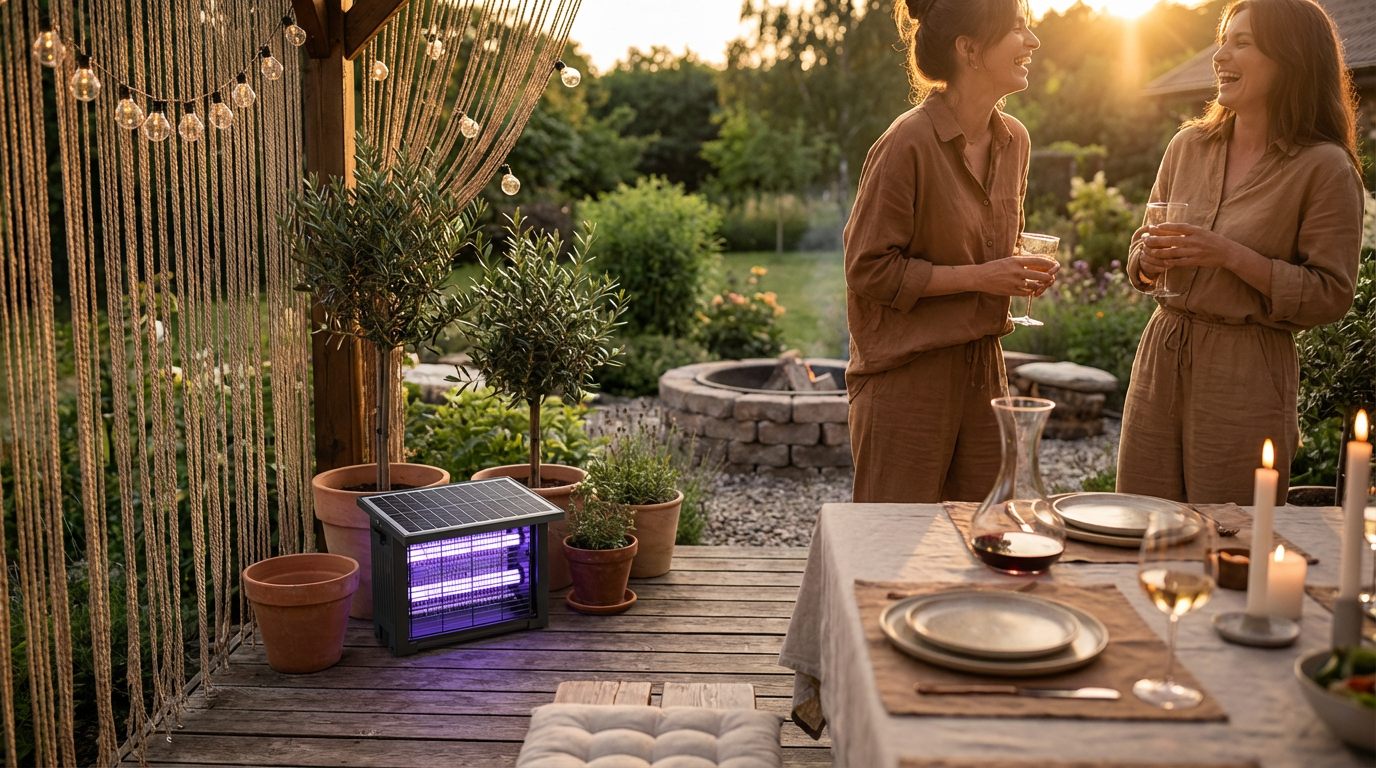
Bright Nights, No Bites: Your Guide to Outdoor Bug Zappers
 Jordan HaleStaff Writer
Enjoying a beautiful evening outdoors can quickly be ruined by the incessant buzz and painful bites of pesky insects. While citronella candles and sprays offer some relief, outdoor bug zappers provide a powerful, chemical-free solution. But how do these glowing guardians of your backyard actually work? Let's shed some light on the science behind bug zappers and help you reclaim your outdoor space.
The Electrifying Truth: How Bug Zappers Work
The core principle behind an outdoor bug zapper is surprisingly simple, yet highly effective. At its heart, a bug zapper consists of a light source, typically a UV (ultraviolet) lamp, and a high-voltage electrical grid surrounding it.
Here's the breakdown:
- Attraction: Most flying insects, particularly mosquitoes, moths, and gnats, are naturally attracted to UV light. The zapper's lamp mimics this natural beacon, drawing them in like moths to a flame (literally!).
- The Trap: Once the insect gets close enough, it attempts to fly towards the light source. To reach it, it must pass through the electrified grid.
- The Zap!: Upon contact with two points of the grid simultaneously, the insect completes an electrical circuit, resulting in a swift, electrocution-induced demise. The characteristic "zap" sound is the audible confirmation of a successful elimination.
Benefits Beyond the Buzz
Photo by JINU JOSEPH on Pexels
Beyond the obvious benefit of fewer bug bites, outdoor bug zappers offer several advantages:
- Chemical-Free Pest Control: Unlike sprays or coils, zappers don't release harmful chemicals or fumes into the environment, making them a safer choice for families and pets.
- Wide Coverage: A single bug zapper can clear insects from a significant area, protecting your entire patio, deck, or garden.
- Automatic Operation: Most zappers operate continuously once plugged in, offering round-the-clock protection without constant reapplication.
- Immediate Results: The "zap" provides instant gratification, letting you know the device is working.
Tips for Choosing and Using Your Bug Zapper
To maximize the effectiveness of your outdoor bug zapper, consider these tips:
- Placement is Key: Position your zapper away from your primary gathering areas (e.g., patio table). Place it about 15-20 feet away to draw bugs away from you, not towards you.
- Consider Area Coverage: Check the coverage area (e.g., acres or square feet) specified by the manufacturer to match it with your outdoor space.
- Power Source: Decide between corded electric models for continuous power or solar-powered options for energy efficiency and portability (though these may be less powerful).
- Cleaning is Crucial: Regularly empty the collection tray and clean the grid to maintain optimal attraction and electrocution efficiency. Always unplug before cleaning!
- When to Turn On: Turn your zapper on before dusk, as this is when many nocturnal insects become most active.
- Don't Forget Other Measures: While effective, bug zappers are best used in conjunction with other pest control methods, such as eliminating standing water and ensuring screens are intact.
Conclusion

Photo by Ahmet ÇÖTÜR on Pexels
Outdoor bug zappers offer a practical, chemical-free solution to turn your backyard into a more enjoyable, bite-free haven. Understanding how they work and implementing smart placement and maintenance strategies will ensure you get the most out of your glowing guardian. Say goodbye to irritating bites and hello to peaceful evenings under the stars.