Outdoor Bug Zapper Solutions for RV Campsite Defense
 Sam VasquezBuying Guide Lead
November 1, 2026. This guide explores the technical requirements for maintaining a pest-free perimeter around a recreational vehicle. It is written for full-time travelers and weekend campers who need reliable insect management without constant chemical sprays.
The Challenge of Maintaining a Clean Perimeter
When you pull into a new campsite, you are essentially invading the natural habitat of various biting insects. Unlike a stationary home where you can treat the standing water or tall grass, an RV requires a mobile, immediate defense system. The proximity of the vehicle to the outdoor living space—usually just under the awning—creates a unique airflow pattern that can trap mosquitoes and flies right at your doorstep. According to Thermacell, campers often require a 15-foot protection zone to be effective, particularly when using fuel-powered devices designed for the woods. However, the needs of an RV user differ from a backpacker. While a backpacker prioritizes weight, an RVer prioritizes continuous coverage and the ability to clear an area of existing pests that have already been attracted to the vehicle's lights. Relying solely on a rechargeable camping mosquito lamp is great for inside the van, but the exterior requires something with more draw and higher voltage to handle the volume of bugs found in wooded sites. I have seen many people try to get by with just a small lantern, but when the sun goes down in a place like Northern Alberta or the Florida Keys, that single point of light isn't enough to secure the site. Community discussions on Facebook suggest that while many campers swear by Thermacell for personal space, they often supplement with physical zappers or DEET-based repellents to create a layered defense. For those who want to avoid the recurring cost of fuel pads, a dedicated electric unit is the logical step.
Technical Advantages of the Outdoor Bug Zapper
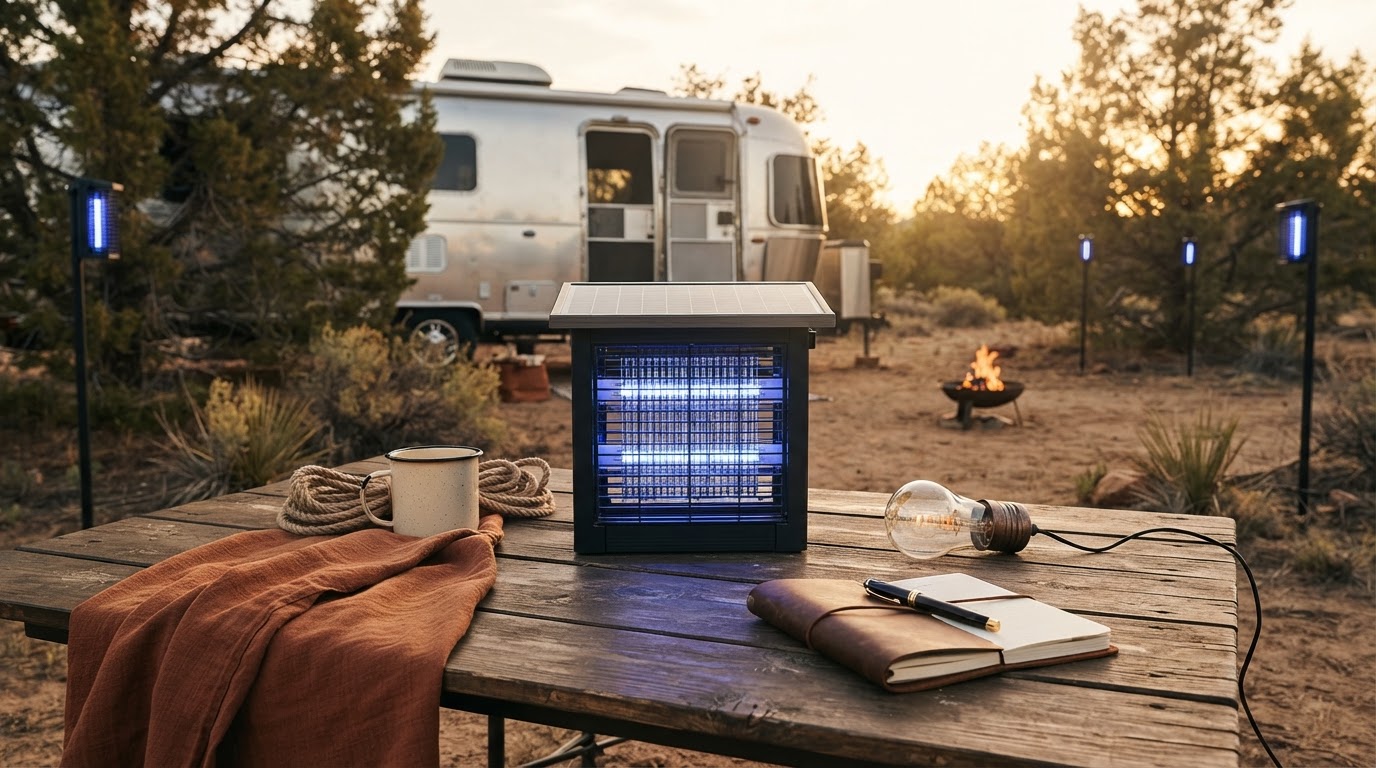
For the off-grid mosquito control device market, the Outdoor Bug Zapper fills a specific gap between small portable lights and heavy-duty industrial units. If you are running on a solar setup, you need a device that can handle the surge of a high-voltage grid without draining your house batteries. This is where a heavy-duty solar mosquito light or a high-capacity rechargeable unit becomes essential. In my experience, the 4500v electric mosquito swatter is the perfect tool for clearing the interior of the RV before bed, but the Outdoor Bug Zapper is what you leave running under the awning to prevent those bugs from ever getting inside. Between these two, I’d go with the stationary zapper for the bulk of the work because it operates autonomously. It targets the insects that are naturally attracted to the UV spectrum, which is particularly effective in dark-sky campsites where your RV is the only light source for miles. Unlike the fuel-powered options mentioned by StressLess Camping, which require 12-hour refill cycles and constant monitoring, an electric zapper provides a set-it-and-forget-it solution. If you're on a budget, you might be tempted by cheap plastic units from big-box stores, but those often lack the weatherproofing required for a device that stays outside in a thunderstorm. The Outdoor Bug Zapper is designed to handle the variable conditions of the road, from high humidity to sudden downpours, without shorting out. It serves as a primary rv campsite bug defense device, acting as a sacrificial light source that draws pests away from your entry door. This is a critical distinction: you don't want the bugs near you; you want them at the zapper, which should be placed about 10 to 15 feet away from your seating area. This creates a clear path for you to move in and out of the vehicle without a swarm following the light from your cabin.
Selecting the Right Device for Your Rig
Choosing a defense system depends entirely on your camping style. If you are mostly at full-hookup sites with 30-amp service, you have the luxury of running larger units. If you are boondocking, efficiency is king. Skip this if you only camp in the desert where humidity is low and bugs are rare; you likely won't see the return on investment. However, for everyone else, here is what I’d actually buy: a high-voltage weather-resistant zapper for the exterior and a smaller rechargeable camping mosquito lamp for the bedside table. This dual-layer approach ensures that even if one bug slips past the perimeter, it won't be buzzing in your ear at 2 AM. When evaluating a device, check the voltage rating; anything under 2000v might only stun larger flies rather than killing them instantly. You also want to look for a removable tray that is easy to clean, as a month in the woods can fill a device quickly. Camping World often stocks a variety of DEET-free options, but for a permanent fixture on your rig, the mechanical kill of a zapper is the most reliable.
Before you commit to a specific model, run through this checklist:
- Power Source Compatibility: Does the device run on 12V DC, 110V AC, or internal solar/rechargeable batteries?
- Voltage Output: Ensure the grid provides at least 3000v to 4500v for effective elimination of larger pests.
- Weather Rating: Confirm the unit is IPX4 rated or higher for safe use in rain.
- Attractant Options: Check if the unit can accept octenol cartridges to increase its draw for mosquitoes specifically.
- Cleaning Access: Look for a tool-less entry to the bulb and tray for quick maintenance during travel.
- Mounting Versatility: Ensure it can be hung from an awning arm or placed on a stable flat surface like a picnic table.