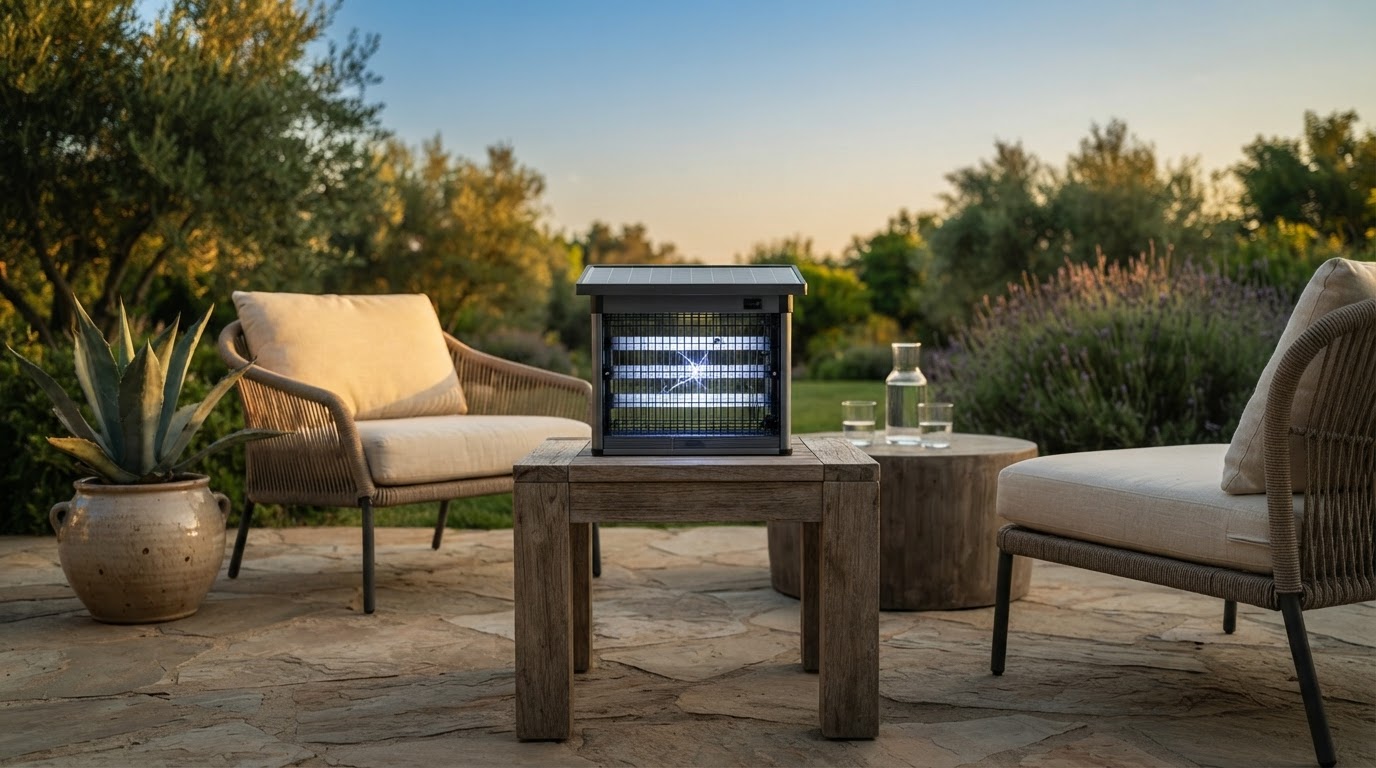
Which Outdoor Bug Zapper offers the best solar fly killing?
 Priya RamanSenior Analyst
November 14, 2026 — The most effective solar-powered fly killers prioritize grid voltage over bulb wattage, with 4000V+ units generally outperforming aesthetic torch-style models in high-density areas. Selecting a device for off-grid insect management requires evaluating the trade-off between battery capacity and instantaneous discharge intensity. Two axes matter here: the peak voltage of the internal transformer and the surface area of the attractant light source.
Think of it as a matrix of portability versus lethality. While traditional plug-in units like the Flowtron BK40DK remain a gold standard for 1-acre coverage, the shift toward cordless, solar-integrated hardware has introduced new variables in efficiency for the Outdoor Bug Zapper category. High-performance solar units must now balance daytime charging efficiency with the energy-intensive task of maintaining a lethal charge through the peak evening hours of insect activity.
How does voltage impact solar fly killer efficacy?
High-voltage grids are the primary determinant of a clean kill for larger insects like houseflies, as lower-powered units may only stun rather than eliminate the target. The decision rule: prioritize units with at least 4,000V of output if your primary goal is fly management rather than just small-gnat control. According to Langy Energy, their Upgraded Solar Bug Zapper Outdoor-4500V provides a practical high-output solution for homeowners seeking low-maintenance, solar-powered protection without the need for a constant AC power supply.
Voltage alone is insufficient without a reliable power reserve. Solar-powered devices are subject to variable sunlight conditions, meaning the internal lithium-ion battery must be robust enough to sustain the grid's discharge frequency throughout the night. For users transitioning to a solar powered bug zapper outdoor, understanding that these devices work best when paired with supplementary attractants is critical. Data from Thanos Home forums suggests that while solar zappers are eco-friendly, they reach peak performance—reducing mosquito and fly presence by up to 90%—when integrated into a multi-modal control strategy rather than as a standalone fix.
Which designs maximize solar attractant range?
Design efficacy for solar fly killers is determined by the 360-degree visibility of the UV light source and the weatherproofing of the solar panel itself. Once you see it this way, the distinction between decorative lighting and functional pest control becomes clear. For example, Bob Vila’s 2026 testing highlights the Pic Solar Torch as an eco-friendly choice that prioritizes aesthetic design, though it serves a different niche than heavy-duty industrial units meant for agricultural or large-scale backyard use.
Integrated solar panels must be positioned for maximum UV exposure during the day to ensure the battery is primed for the evening. In a 5-step off-grid setup for outdoor bug zapper performance, placement is the most frequently cited point of failure. Units like the Rossetta Solar Fly Zapper incorporate flame-light aesthetics to serve a dual purpose on a patio, but for pure fly-killing power, the OnBeam Solar Bug Zapper and the Coospider-Repta 18W Solar are noted for their focus on higher-wattage UV output. Choosing the best solar bug killer for patio use involves matching the device’s light radius to the specific square footage of the seating area to ensure flies are drawn away from humans and toward the grid.
Quick answers
Q: What is the highest voltage available in a consumer solar bug zapper? A: Current market leaders like Langy Energy offer upgraded solar models featuring a 4500V grid, which is significantly higher than the 1000V-2000V range found in entry-level decorative solar stakes.
Q: Can solar fly killers handle large houseflies effectively? A: Yes, provided the unit uses a high-intensity UV bulb, such as the 18W systems found in Coospider-Repta models, which provides enough attractant draw and grid power to neutralize larger dipterous insects.
Q: How long does a typical solar bug zapper battery last on a full charge? A: Most high-quality Outdoor Bug Zapper units are designed to run for 6 to 10 hours after a full day of sunlight, though this duration can decrease if the zapper is frequently triggered by high insect volume.
Q: Are solar bug zappers waterproof for winter use? A: Most units carry an IP65 or IP66 weatherproofing rating, but manufacturers generally recommend storing them indoors during extreme freezing temperatures to protect the lithium-ion battery from degradation.
Learn more about Outdoor Bug Zapper at https://outdoorbugzapper.com.
Sources
- 7 Best Solar Bug Zapper Reviews
- Best Solar Bug Zapper for Backyard Use (2026 Guide)
- The Best Bug Zappers of 2026, Tested and Reviewed