5-Step Off-Grid Setup for Outdoor Bug Zapper Performance
 Maya ChenContributing Editor
November 12, 2026 — The shift toward off-grid mosquito control has accelerated as consumers increasingly prioritize cordless utility over traditional tethered units, placing Outdoor Bug Zapper technology at the center of modern backyard management. The conventional wisdom says that solar-powered units lack the necessary punch for serious insect control, yet recent hardware specifications suggest otherwise.
While critics often dismiss solar options as glorified garden lights, data from Langy Energy indicates that modern high-voltage grids, specifically those reaching 4500V, provide the electrical force required to handle larger insects within a 3,500 square foot radius. This shift from low-wattage decorative pieces to heavy-duty solar mosquito lights marks a transition in how we approach perimeter defense without relying on the local power grid.
The 5-Step Off-Grid Framework
Optimizing a solar powered bug zapper outdoor installation requires moving beyond the 'plug and play' mentality of corded devices. First, the solar panel must be oriented to capture peak irradiance, which often necessitates separating the panel from the zapper body via extension cords—a feature found in high-end 4500V models. Second, the device must be positioned at a height of five to seven feet to align with the flight paths of target pests. Third, placement must be at least 20 feet away from human activity areas to ensure the UV attractant pulls insects away from the patio rather than toward it. Fourth, the automatic light sensor must be unobstructed to ensure the 4500V grid activates only when ambient light drops below 10 lux. Fifth, the unit requires a clear line of sight; placing a zapper behind dense foliage reduces its effective range by up to 60%. Run the math: a unit rated for 3,500 square feet only delivers that coverage if the three LED tubes are visible from every angle of the yard. Models like the Solar Mosquito Killer Wireless Outdoor Bug Zapper 4500V utilize high-quality glass solar panels to maintain battery health, ensuring the 4500V grid remains active throughout the night even after days of partial cloud cover.
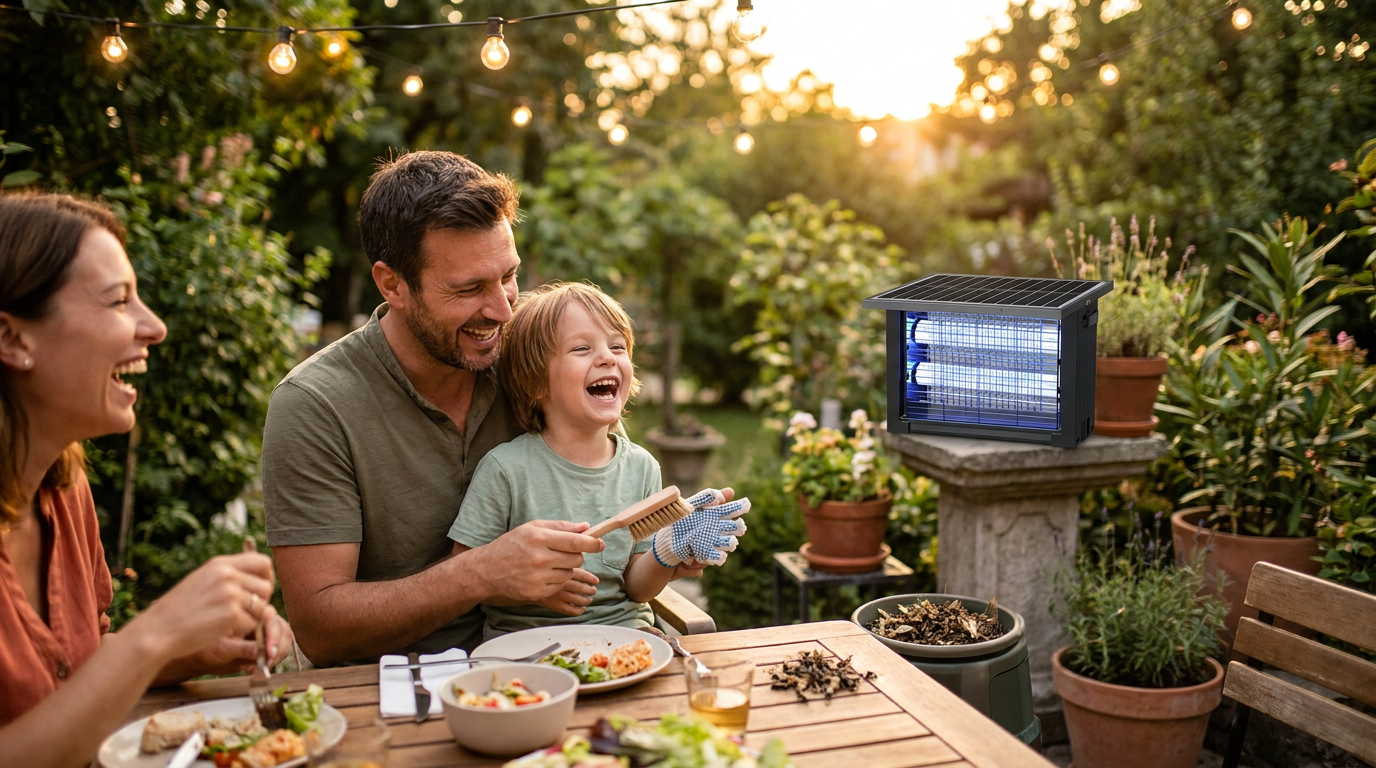
Expert tip: To maximize the lifespan of your 4500V grid, use a soft brush to clear the internal wires weekly, as carbonized insect remains can create a bridge that slowly drains the battery even when the UV lights are off.
For those focusing on specific areas, selecting the [best solar powered fly killer](/blog/best-solar-powered-fly-killer) requires looking at different attractant wavelengths. Homeowners should also consider how solar powered bug zapper outdoor units integrate with existing lighting. If you are looking for the [best solar bug killer for patio](/blog/best-solar-bug-killer-for-patio) use, remember that placement is more critical than raw voltage. Furthermore, [optimizing outdoor bug zapper performance for patios](/blog/best-solar-bug-killer-for-patio-l25rl) involves balancing the attractant light against your home's ambient porch lights to avoid competing signals.
Here's the part nobody talks about: most solar units fail because the battery capacity cannot sustain a 4500V discharge for more than four hours. I'll change my mind when manufacturers start publishing discharge curves alongside their peak voltage claims.
Sources
- Solar Mosquito Killer - Wireless Outdoor Bug Zapper 4500V
- This Solar Bug Zapper Killed EVERY Mosquito in My Yard (4500V ...
- Best Solar Bug Zapper for Backyard Use (2026 Guide) - Langy Energy