Optimizing Outdoor Bug Zapper Performance for Patios
 Priya RamanSenior Analyst
November 10, 2026. Selecting the appropriate solar-powered pest control solution for a residential patio requires balancing aesthetic integration with high-voltage efficacy. This analysis provides a framework for homeowners to evaluate off-grid mosquito control devices based on their specific environmental footprint.
Two axes matter here: the light spectrum used for attraction and the electrical discharge capacity of the internal grid. Think of it as a matrix of environmental conditions versus insect density. For modern patios, the reliance on traditional chemical sprays is declining in favor of integrated electronic systems. According to Langy Energy's research on their Upgraded Solar Bug Zapper Outdoor-4500V, high-voltage grids are essential for maintaining a low-maintenance, chemical-free perimeter. This data suggests that while lower voltage units may function for small enclosed spaces, a patio environment exposed to wind and open air requires a sustained charge that only a solar powered bug zapper outdoor with a high-capacity lithium battery can provide. The challenge for many consumers is that off-grid mosquito control devices, which generated over 1,800 search impressions in recent market analysis, often fail due to insufficient solar panel conversion rates. When the panel cannot recharge the battery fully during the day, the zapper fails to maintain its lure during the peak twilight hours when mosquito activity is highest. Choosing a solar powered bug zapper outdoor involves verifying that the solar cell is monocrystalline, which offers higher efficiency in partial shade environments common to covered patios.
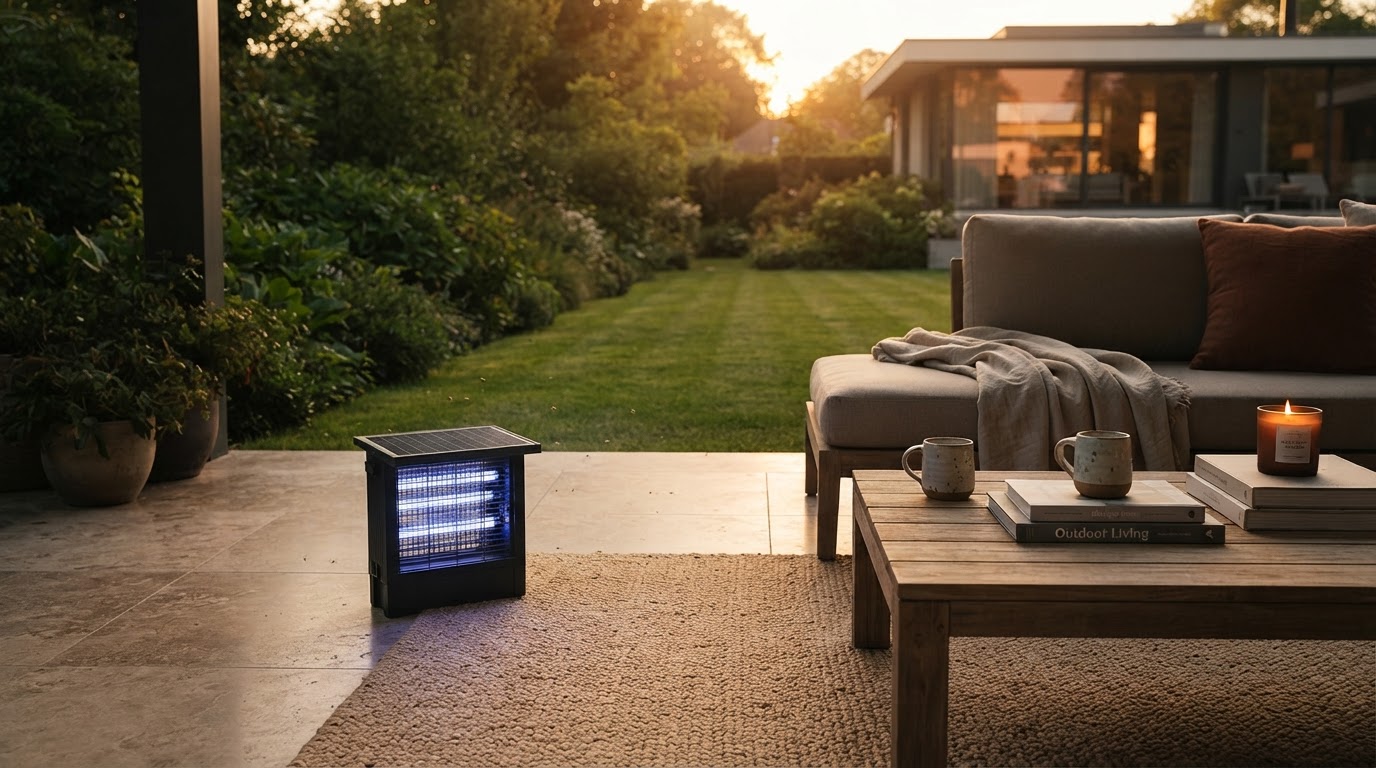
The Outdoor Bug Zapper addresses these specific patio requirements by utilizing a dual-wavelength UV lure designed to target both mosquitoes and larger flying pests. Unlike standard garden lights, this device is engineered for heavy duty solar mosquito light performance, ensuring the grid remains active throughout the night. The decision rule for patio placement focuses on the "draw-away" effect: positioning the unit approximately 15 to 20 feet from the primary seating area. This creates a secondary light source that intercepts insects before they reach human activity. While a best solar powered fly killer might focus on broader daytime attraction, a dedicated patio unit like the Outdoor Bug Zapper prioritizes the dusk-to-dawn cycle. The internal 4500V grid ensures that even larger insects are neutralized instantly, preventing the "stun-and-drop" failure common in lower-powered units. Once you see it this way, the zapper becomes less of a standalone gadget and more of a strategic barrier. This is particularly relevant for those seeking a best solar powered fly killer that can withstand the elements, as the Outdoor Bug Zapper features an IP65 waterproof rating, protecting the electronic components from rain and humidity without requiring the homeowner to move the device during storms. This durability makes it a staple for those committed to a best solar bug killer for patio setup that requires minimal human intervention.
Evaluating a solar bug killer requires a systematic decision framework to ensure the hardware matches the geographical and entomological needs of the property. Users in high-humidity regions should prioritize units with rust-resistant housing, while those in northern latitudes must ensure the solar panel is adjustable to capture low-angle winter sun. As noted in the Thanos Home community forums, solar zappers work best when paired with other methods to keep 90% of mosquitoes away without constant noise. This synergy is critical for patio comfort. When selecting your hardware, use the following checklist to verify the unit's suitability for a permanent patio installation:
- Verify the grid voltage exceeds 4000V to ensure lethal contact for larger pests.
- Confirm the inclusion of an automatic light sensor for dusk-to-dawn operation.
- Check for a removable collection tray to simplify weekly maintenance.
- Ensure the solar panel is integrated with a battery capacity of at least 2000mAh.
- Look for a dual-mode switch that allows for both zapping and standard lighting.
Shop Outdoor Bug Zapper here: https://outdoorbugzapper.com
Sources
- Best Solar Bug Zapper for Backyard Use (2026 Guide) - Langy Energy
- Top 3 BEST Solar Bug Zapper 2026 - YouTube
- Are Solar-Powered Bug Zappers Worth It for Backyard Camping?