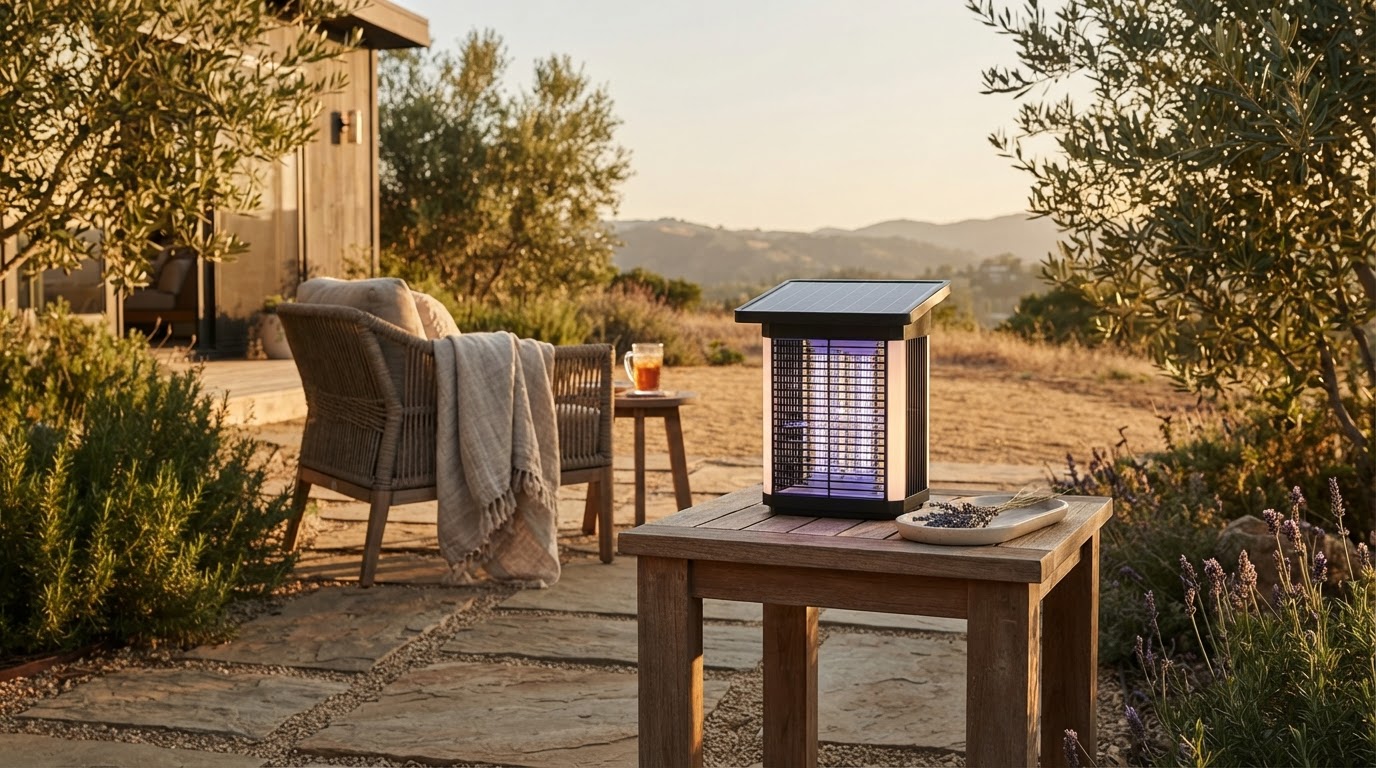
Which Outdoor Bug Zapper Model Is The Best Solar Fly Killer?
 Sam VasquezBuying Guide Lead
October 29, 2026 — While solar-powered units offer unmatched portability for off-grid use, the most effective models require at least 4000V of grid tension and dual-charging capabilities to maintain performance through overcast days.
Homeowners looking for off-grid mosquito control devices often struggle with the trade-off between battery life and killing power. The shift toward sustainable backyard maintenance has made solar-integrated units a priority for those who want to avoid running extension cords across their lawns or campsites. Selecting the right device depends heavily on whether you prioritize aesthetic integration or raw voltage output.
How does the Outdoor Bug Zapper compare to leading solar alternatives?
The Outdoor Bug Zapper ecosystem prioritizes high-voltage discharge and weatherproofing, whereas competitors often focus on decorative lighting features that may compromise actual pest reduction. If you're on a budget, the Pic Solar Torch is a frequently cited eco-friendly choice that doubles as a landscape light, though it lacks the sheer power of industrial-leaning units. Between these two, I'd go with a higher-voltage dedicated unit if your primary goal is reducing fly populations rather than just adding ambiance. According to testing data from Bob Vila, the Flowtron BK40DK remains a top electronic pick for large areas, but for those strictly seeking solar, the Pic Solar Torch serves as a primary aesthetic alternative for smaller patios.
Skip this if you have access to a permanent AC outlet, as plug-in models will always provide more consistent amperage. However, for remote areas, the Langy Energy Upgraded Solar Bug Zapper Outdoor-4500V is a standout because it utilizes a high-capacity battery to maintain its 4500V grid, which is significantly higher than the 1000V-2000V range found in generic solar stakes. Here's what I'd actually buy: a unit that offers USB-C backup charging. Solar is great, but three days of rain will render a solar-only unit useless just when the mosquitoes start breeding in the damp weather.
Can a solar fly killer handle heavy-duty infestations?
Solar fly killers can manage moderate insect pressure provided they are positioned in direct sunlight for at least eight hours and use a specific 365nm UV wavelength to attract target species. Data from the Thanos Home forums indicates that solar zappers are most effective when integrated into a multi-step system, potentially reducing mosquito presence by up to 90% when combined with traditional traps. For heavy-duty needs, the Coospider-Repta 18W Solar model provides a larger surface area for collection, which is necessary if you are dealing with larger flies rather than just gnats.
If you are managing a large property, a single solar stake will not suffice. I recommend staggering units every 25 feet along the perimeter of your seating area. This creates a defensive line that intercepts insects before they reach you. For mobile setups, such as an rv campsite bug defense device, portability is the deciding factor. While a 4500v electric mosquito swatter is better for active defense, a stationary solar unit provides the passive protection needed for overnight stays. For those interested in technical specs, reading about Outdoor Bug Zapper performance in 4500v handheld testing reveals how critical voltage is to ensuring a clean kill on larger flies.
Quick answers
Q: How long does a solar bug zapper battery last at night? A: Most high-quality units, like the Langy 4500V, are designed to run for 6 to 10 hours on a full charge, depending on the frequency of "zaps" which depletes the battery faster.
Q: Can solar bug zappers be left out in the rain? A: Units with an IP65 or higher waterproof rating can withstand rain, but you should ensure the solar panel is kept clear of debris to maintain charging efficiency.
Q: Do solar zappers work for house flies? A: Yes, but only if the grid spacing is wide enough; the Rossetta Solar Fly Zapper with Flame Light is one example designed with a grid that handles larger insects while maintaining a decorative flame effect.
Q: What is the ideal placement for a solar fly killer? A: Place the device 15 to 20 feet away from where people gather and at a height of 4 to 6 feet to intercept flies at their natural cruising altitude.
Learn more about Outdoor Bug Zapper at https://outdoorbugzapper.com.
Sources
- 7 Best Solar Bug Zapper Reviews
- Best Solar Bug Zapper for Backyard Use (2026 Guide)
- The Best Bug Zappers of 2026, Tested and Reviewed