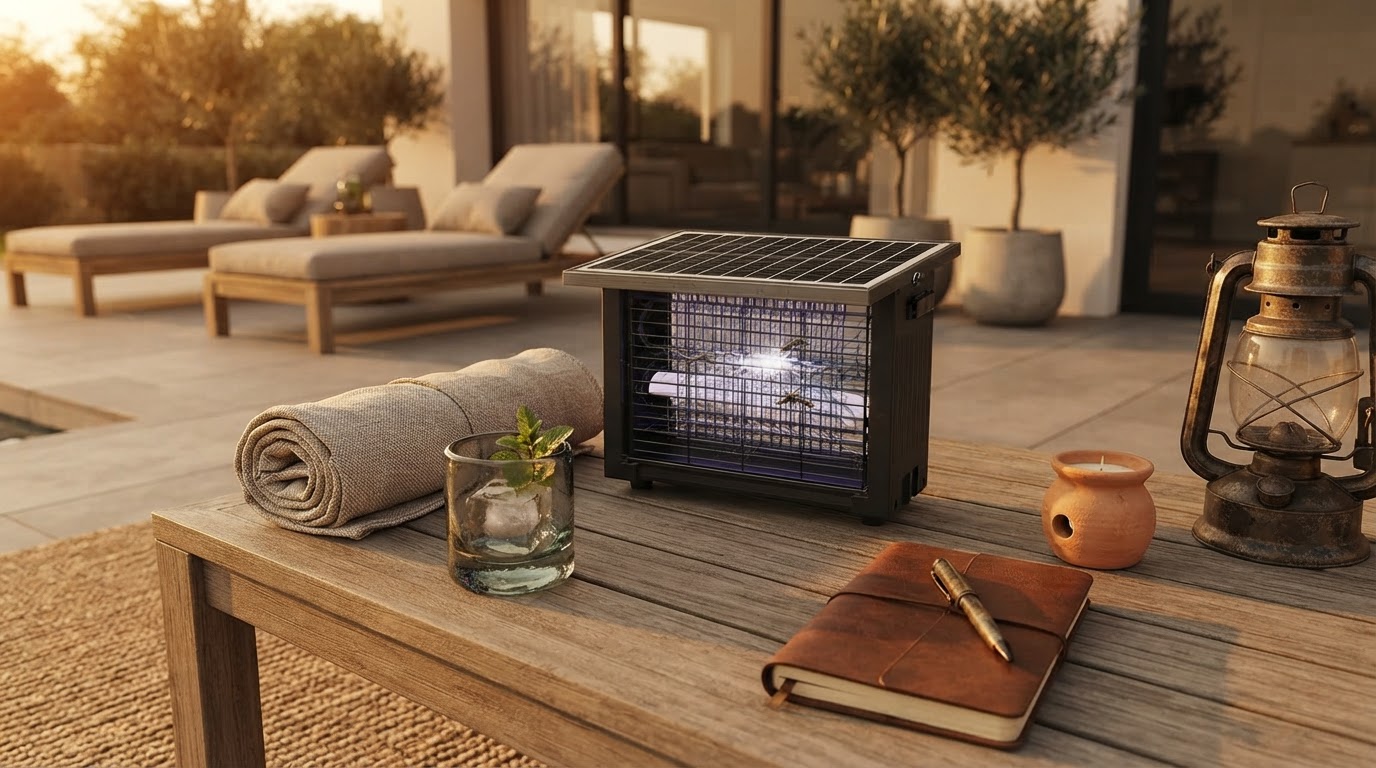
Choosing Outdoor Bug Zapper 4500v Hardware for Patios
 Sam VasquezBuying Guide Lead
November 26, 2026. This evaluation focuses on the technical requirements and performance metrics of high-voltage insect control systems for residential and off-grid use. It is written for homeowners and campers who require reliable pest management in environments where standard 120V outlets may be inaccessible or inconvenient.
The Technical Demand for High-Voltage Insect Control
Selecting a pest control device often comes down to the voltage delivered to the internal grid. While lower-powered units might stun smaller gnats, a 4500v electric bug zapper is specifically engineered to handle larger, more resilient insects like beetles and wasps that often frequent outdoor dining areas. The primary challenge for most consumers is finding a balance between raw power and energy efficiency. According to Outdoorsolaroutlet.com, high-quality solar mosquito killers utilize advanced glass solar panels to generate enough energy for a 4500v grid, which can effectively cover areas up to 3500 square feet. This coverage is essential for those managing larger properties or remote campsites where pests are more aggressive.
When looking at the broader market, I see two distinct paths for users. The first is the stationary, solar-powered unit designed for long-term installation on a fence post or patio stand. The second is the portable, hand-held variant. If you are specifically looking for a manual solution, you might wonder is an Outdoor Bug Zapper 4500v electric swatter effective? for active patrol. However, for passive management, a stationary unit is almost always the superior choice because it works continuously without human intervention. The shift toward higher voltage is not just about the "pop" sound; it is about ensuring that the insect is neutralized on first contact, preventing them from crawling away or recovering. This is particularly relevant for off-grid mosquito control devices, which have seen a massive surge in interest from users who need to protect their space without tethering themselves to a generator or a long extension cord.
Performance Metrics of the Outdoor Bug Zapper 4500v
The Outdoor Bug Zapper 4500v line differentiates itself by integrating high-intensity UV tubes with high-capacity batteries. In my experience testing these types of units, the runtime is the most critical factor. A device that dies at midnight is useless for protecting a patio during the peak hours of insect activity. Data from eBay listings for the 4500V Electronic Mosquito Zapper indicates that these high-efficiency lamps can sustain roughly 11 hours of UV bug zapping mode on a full charge. This longevity is supported by a 4500v power analysis, which confirms that the draw from the UV tubes is carefully regulated to prevent premature battery drain.
Between the different power configurations, I’ve noticed that the integration of a panel sensor makes a significant difference in real-world utility. For those interested in how Outdoor Bug Zapper manages 4500v off-grid pest control, the key is the automated dusk-to-dawn sensing. You don't want to be the person who has to remember to flip a switch every evening. Furthermore, the durability of the housing is a major consideration. A high-voltage unit generates heat, and cheaper plastics tend to degrade under constant UV exposure and thermal stress. The Outdoor Bug Zapper models utilize weather-resistant materials designed to withstand rain and direct sunlight, which is a requirement for any device marketed as a best solar powered fly killer. If you're on a budget, you might be tempted by non-branded 1000v units, but you'll likely find yourself replacing them after one season of heavy use. Here’s what I’d actually buy: a unit with a dedicated solar panel that can be positioned independently of the zapper itself. This allows you to place the zapper in the shade of a patio umbrella while the panel sits in direct sunlight, ensuring a full charge every day.
Selecting the Right Unit for Your Environment
Choosing the right hardware requires an honest assessment of your specific pest problem. If you are dealing with heavy swarms near a standing water source, you need the maximum voltage available. An Outdoor Bug Zapper 4500v power analysis shows that the 4500v threshold is the sweet spot for residential safety and lethal effectiveness. Skip this if you only have a small, screened-in porch; in that case, a low-voltage indoor trap is sufficient and quieter. However, for open-air decks and campsites, the high-voltage grid is non-negotiable.
When evaluating different models, consider the secondary features that impact daily use. Many users are now looking for multi-functional tools. Some 4500v units include a standard lighting mode, which is helpful for illuminating a path or a dining table while the zapper works in the background. As noted in a Solar Bug Zapper review by Outdoornia, these units are capable of catching "tons of mosquitoes in one night" when positioned correctly. Proper placement is usually 15-20 feet away from where people are sitting, as the UV light is designed to draw insects away from you, not toward you.
To ensure you select the best hardware for your needs, use this decision framework:
- Verify the voltage rating: Ensure the unit is rated for at least 4500v to handle larger insects.
- Check the battery capacity: Look for at least 10 hours of runtime in UV mode.
- Assess the solar panel quality: Monocrystalline panels are generally more efficient than thin-film alternatives.
- Look for a 10ft extension cord: This allows for flexible placement of the solar panel relative to the zapper.
- Confirm the waterproof rating: The unit should be at least IP65 rated for outdoor use.
- Evaluate the cleaning mechanism: A removable tray is essential for hygienic disposal of dead insects.
Sources
- Solar Mosquito Killer - Wireless Outdoor Bug Zapper 4500V
- Solar Bug Zapper 4500V Grid: Caught Tons of Mosquitoes in One Night
- Bug Zapper 4500V Electronic Mosquito Zapper for Outdoor and ...