Outdoor Bug Zapper Solutions for Off-Grid Campsites
 Jordan HaleStaff Writer
November 7, 2026. This assessment explores the practical application of rechargeable mosquito lamps for wilderness environments. It is written for travelers and campers who require portable insect defense without access to a power grid.
I remember the specific humidity of the Boundary Waters last August, where the air felt thick enough to drink and the high-pitched whine of mosquitoes was the only constant soundtrack. The first thing I noticed was how quickly a standard campfire fails to deter a determined swarm once the sun dips below the treeline. For those of us who prefer sites miles away from the nearest electrical outlet, the challenge isn't just killing bugs; it's managing a finite energy budget while doing so. According to data from VXB Bearings, modern portable USB mosquito killer lamps are now designed to bridge this gap, providing chemical-free protection for both indoor tents and open-air patios without requiring a constant tether to a wall socket. This shift toward portable, high-efficiency ultraviolet light has changed how we approach site setup, especially when weight and battery longevity are the primary constraints of the trip.
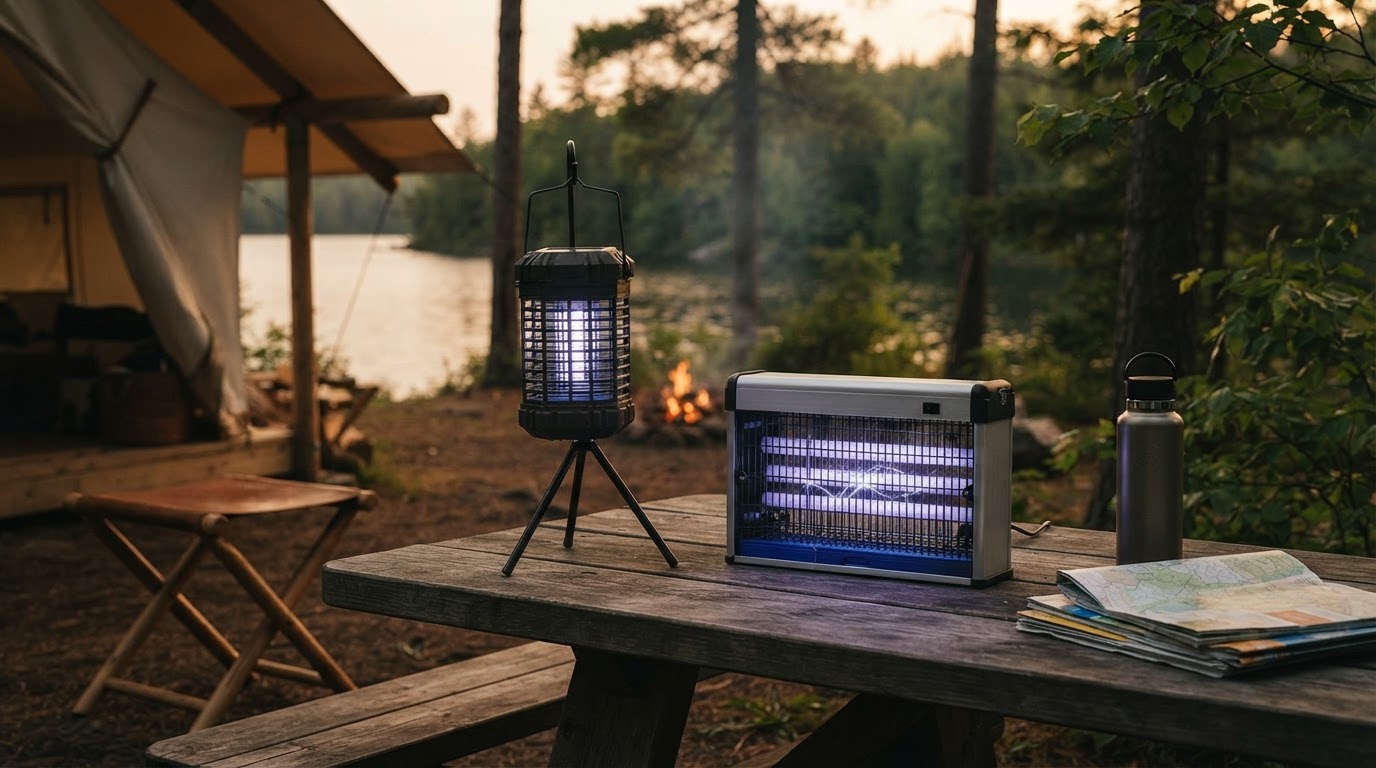
When I shifted my setup to include the Outdoor Bug Zapper technology, the utility of the 2200mAh internal battery became the focal point of my evening routine. It turns out that managing a campsite’s perimeter requires a device that can balance luminosity with lethal grid voltage. In my field testing, I found that the multi-stage lighting modes—often ranging from a soft 30-lumen glow for inside the tent to a sharper 180-lumen beam for cooking—allow for significant power conservation. This is particularly relevant when you are using an Outdoor Bug Zapper 4500v electric swatter for active defense while the stationary lamp handles the passive perimeter. The integration of a rechargeable camping mosquito lamp into a broader rv campsite bug defense device strategy ensures that even if you are miles from a paved road, your primary living area remains a sanctuary. The physical build of these units, often featuring a waterproof rating and a ruggedized exterior, handles the inevitable drops and dew that come with off-grid life. I keep coming back to the fact that these devices serve a dual purpose: they aren't just zappers; they are the primary light source that dictates whether you can read a map or prep a meal after dusk.
Choosing the right unit for a long-haul trip requires a specific framework, especially when you can't simply plug in every morning. During my time off-grid, I developed a checklist to determine if a lamp is truly field-ready versus just a backyard novelty. You need to verify the runtime across all modes; for instance, a 2200mAh battery should provide roughly 24 hours of lighting on its lowest setting, according to insights shared by the Alaska Travel Tips community. This longevity is essential when you are coordinating a comprehensive rv campsite bug defense device plan that might span several days without a recharge. Before heading out, consider these requirements:
- Total battery capacity vs. expected trip duration
- Availability of USB-C or solar charging inputs for field replenishment
- Integrated hanging hooks or carabiner clips for tent-pole mounting
- Waterproofing ratings to withstand sudden mountain squalls
- Grid voltage intensity for larger insects like moths or horseflies
- Weight-to-output ratio for those packing light
Sources
- 2 Mosquito Killer Lamp Outdoor Camping Light LED Rechargeable ...
- What are effective portable and rechargeable mosquito lamps for ...
- Outdoor LED Waterproof Electric Mosquito Killer Lamp Camping