Outdoor Bug Zapper Camping Defense Framework
 Priya RamanSenior Analyst
October 31, 2026 — The rising demand for off-grid mosquito control devices has prompted a shift in how RV enthusiasts integrate the Outdoor Bug Zapper into their campsite perimeters.
Modern campsite management requires a tiered approach to insect mitigation that balances active attractants with passive barriers. According to StressLess Camping, effective mosquito repellent for camping often involves a combination of no-spray devices and LED-equipped lanterns to maintain a clear zone around living areas. When establishing a defense perimeter, two axes matter here: the power source reliability and the attraction radius relative to the sleeping quarters. Think of it as a matrix of energy efficiency versus immediate knockdown power, especially when operating far from shore power.
The Three-Zone Defense Framework
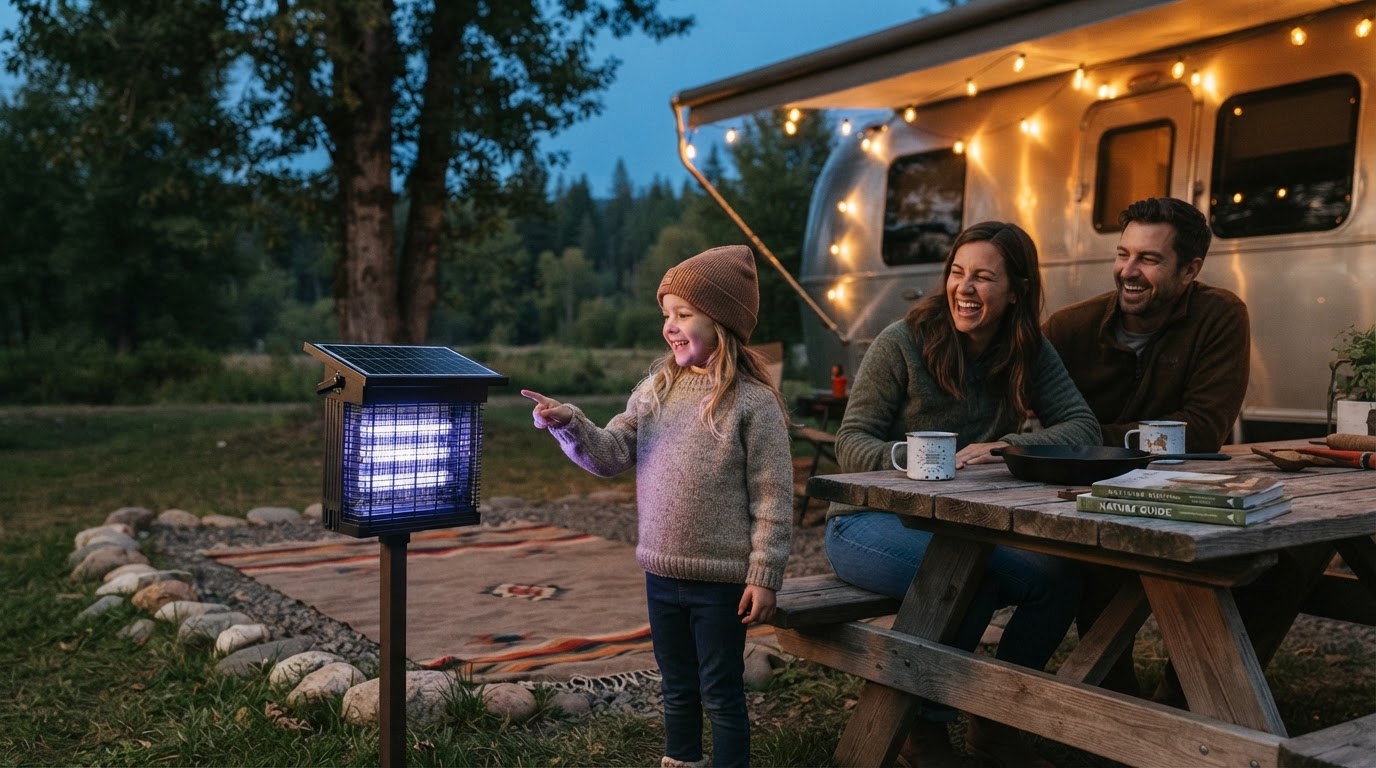
To effectively deploy the Outdoor Bug Zapper in an RV setting, users should follow a Three-Zone Defense Framework that categorizes the campsite based on human activity levels. Zone One is the 'Active Living Area,' where low-emission repellents are preferred to keep the immediate air clear. Zone Two is the 'Perimeter Buffer,' typically 15 to 20 feet away from the RV door, where the Outdoor Bug Zapper is positioned to intercept insects before they reach the interior. Zone Three is the 'Outer Boundary,' where high-intensity attractants draw insects away from the site entirely. The decision rule is simple: always place your primary zapper at the edge of Zone Two to ensure you are not drawing insects directly toward your seating area. For those prioritizing mobility, the Outdoor Bug Zapper 4500v handheld testing shows how manual intervention can supplement static defenses. When selecting hardware, search data indicates a preference for a heavy duty solar mosquito light that can operate autonomously. The Outdoor Bug Zapper provides a cordless solution that eliminates the trip hazards of extension cords in dark campsites. Once you see it this way, the transition from a single device to a coordinated system becomes the standard for long-term stays. Users should also consider how their primary unit compares to the best solar powered fly killer options to ensure they have adequate coverage for both daytime flies and nocturnal mosquitoes. Integrating these tools allows for a comprehensive shield that functions without constant monitoring.
Expert tip: Position your Outdoor Bug Zapper at a height of five to six feet on a shepherd's hook to maximize the 360-degree light emission and ensure the unit remains visible to flying insects above the height of most camping furniture.
Maintaining a bug-free environment requires understanding the specific needs of your location, whether you are using the Outdoor Bug Zapper 4500v handheld testing protocols for quick clearing or relying on the best solar powered fly killer for passive protection.
Sources
- Mosquito Repellent for Camping: Top Picks and Campsite Tips - Thermacell
- What are efficient mosquito repellent devices for camping? - Facebook
- Camping Insect Control Repellent